

Sublingual Herbal Administration: Bypassing Digestive Degradation in Diabetes
Discover how sublingual spray delivery systems bypass hepatic first-pass metabolism to deliver herbal bioactives directly into the bloodstream, offering faster and more effective blood sugar support for people with diabetes.
Article Snapshot
Comprehensive guide discussing Sublingual Herbal Administration: Bypassing Digestive Degradation in Diabetes. Focuses on cellular pathophysiology, phytotherapy, low-GI nutrition, and integrative diabetic care.
- Understands cellular mechanisms of insulin resistance and beta cell stress.
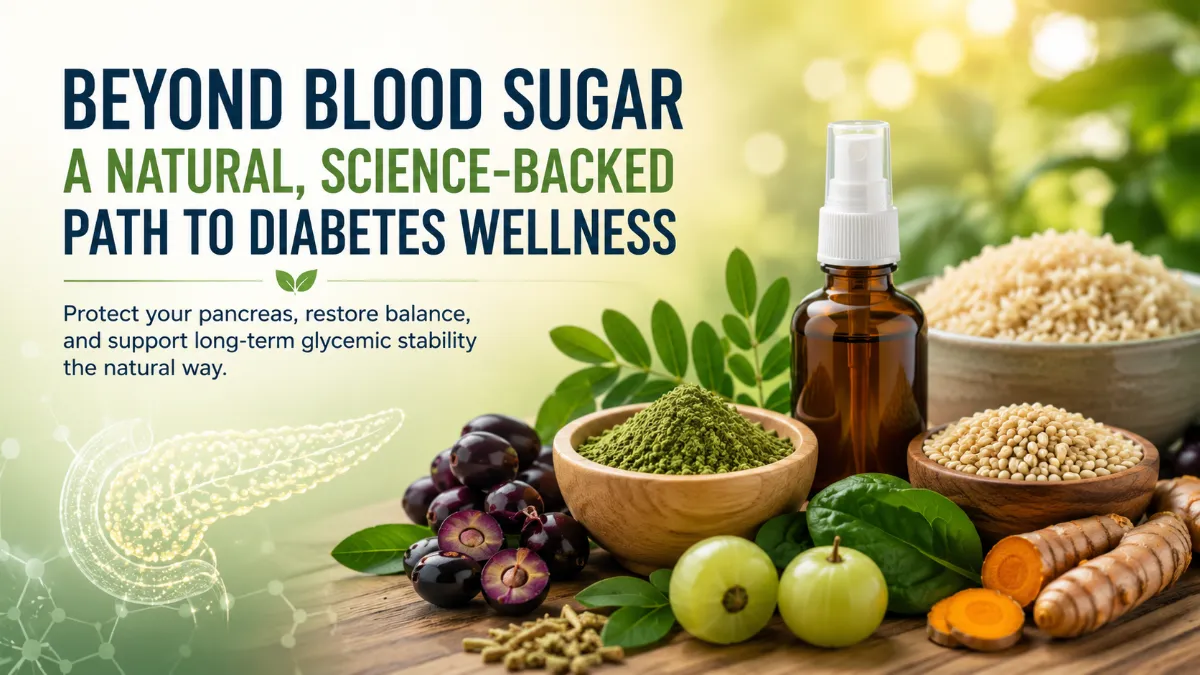
- Highlights key botanical compounds like Gymnema, Curcumin, Amla, and Vijaysar.
- Explains sublingual delivery benefits in avoiding hepatic first-pass degradation.
- Provides dietary guidelines on low-GI rice, millets, barley, and fiber.
- Emphasizes clinical laboratory validation and integrative organ protection.
Medical Review & Verification
The history of herbal medicine is rich with therapeutic compounds of extraordinary potency—yet their clinical effectiveness has long been undermined by a fundamental pharmacological problem: poor oral bioavailability. When botanical extracts are consumed in traditional tablet or capsule form, the gastrointestinal tract and liver conspire to degrade and eliminate the majority of active compounds before they reach systemic circulation. This first-pass metabolic phenomenon has been the Achilles' heel of herbal therapeutics for decades. The advent of sublingual spray delivery technology is changing this story fundamentally.
The Pharmacokinetic Challenge: Why Swallowed Herbs Often Underperform
After oral ingestion of a botanical formulation, the active compounds face a gauntlet of biochemical challenges. In the stomach, hydrochloric acid and pepsin begin chemically degrading polyphenols, glycosides, and alkaloids. The alkaline environment of the small intestine, combined with bile salts and pancreatic enzymes, further dismantles delicate molecular structures. Intestinal epithelial cells express cytochrome P450 enzymes—particularly CYP3A4—that pre-systemically metabolize a broad range of phytochemicals, reducing the concentration of intact bioactive molecules that actually cross the intestinal wall into the portal circulation.
Once absorbed into the portal vein, all compounds travel directly to the liver—the body's primary metabolic processing center. Hepatic CYP450 enzymes, UDP-glucuronosyltransferases, and sulfotransferases rapidly conjugate and transform many phytochemicals into water-soluble metabolites for urinary excretion. This hepatic first-pass metabolism can reduce the systemic bioavailability of certain botanical actives to less than 10% of the administered dose—meaning that even with high-quality herbal preparations, only a fraction of the active ingredients reach the target tissues where therapeutic effects are needed.
Sublingual Mucosa: Nature's Express Highway
The floor of the mouth harbors one of the body's richest mucosal vascular networks. Beneath the thin, non-keratinized epithelium of the sublingual region lies a dense plexus of capillaries and venules that drain directly into the sublingual veins and subsequently into the internal jugular vein and superior vena cava—bypassing the portal circulation entirely. This anatomical arrangement provides a direct express route into systemic circulation, circumventing both intestinal and hepatic first-pass metabolism.
The sublingual mucosa is specifically characterized by its high permeability relative to other mucosal surfaces. The epithelium is thin (approximately 100–200 μm compared to 300–500 μm in buccal mucosa), non-keratinized, and continuously bathed in saliva that maintains a pH of approximately 6.2–7.4—favorable for absorption of many botanical actives. The lamina propria beneath is richly vascularized, and the high surface-to-volume ratio of fine mist droplets from a sublingual spray maximizes contact area with this absorptive surface.
Key Botanical Compounds in Sublingual Formulations for Glycemic Support
The selection of botanical actives for sublingual delivery must consider both their anti-diabetic pharmacological properties and their physicochemical suitability for mucosal absorption. Molecules with appropriate lipophilicity (log P), molecular weight, and aqueous solubility characteristics are ideal candidates for sublingual bioavailability enhancement.
Gymnemic Acids from Gymnema Sylvestre
Gymnemic acids are amphiphilic triterpenoid glycosides that possess a favorable molecular profile for sublingual absorption. Their interaction with taste receptors on the tongue—blocking sweet taste perception—is itself a demonstration of their capacity to act at the sublingual mucosal surface. When delivered via spray, gymnemic acids achieve rapid contact with these taste receptor cells and simultaneously begin systemic absorption. Animal pharmacokinetic studies have demonstrated significantly higher plasma concentrations of gymnemic acid metabolites following sublingual versus oral administration, with faster time-to-peak concentration (Tmax) consistent with direct mucosal absorption.
Curcumin
Curcumin's notoriously poor oral bioavailability—estimated at less than 1% in standard formulations due to rapid intestinal and hepatic glucuronidation—has been a major impediment to its clinical utilization despite compelling in vitro and animal data. Sublingual spray formulations utilizing nano-emulsified or lipid-based curcumin can dramatically improve mucosal permeation. By delivering curcumin directly across the sublingual mucosa into the bloodstream, absorption is achieved before hepatic enzymes can initiate conjugation, resulting in plasma concentrations sufficient to elicit the anti-inflammatory NF-κB suppression and AMPK activation mechanisms critical for glycemic benefit.
Berberine
Berberine, an isoquinoline alkaloid found in plants like Berberis aristata (Daruharidra), is one of the most well-documented botanical hypoglycemic agents, with clinical evidence of HbA1c reduction comparable to metformin in certain studies. Berberine acts primarily by activating AMPK, inhibiting mitochondrial complex I, and upregulating GLUT-4 expression in skeletal muscle. However, its conventional oral bioavailability is limited by P-glycoprotein efflux transporters in intestinal epithelium. Sublingual delivery can bypass this efflux mechanism, achieving systemic concentrations more effectively.
Amla Polyphenols
The water-soluble tannins, emblicanin-A, emblicanin-B, and punigluconin from Amla (Phyllanthus emblica) are potent antioxidants that reduce oxidative stress in pancreatic islet tissue. These compounds, being highly hydrophilic, exhibit rapid dissolution and favorable penetration through the aqueous sublingual mucosal environment. Sublingual delivery ensures that these fragile polyphenols reach systemic circulation before they encounter the alkaline intestinal environment that promotes their rapid oxidation and inactivation.
The Mechanism of Postprandial Glucose Surge Interception
The postprandial period—the 60–120 minutes following a carbohydrate-containing meal—represents the most metabolically volatile window for people with Type 2 diabetes. Blood glucose concentrations can surge rapidly, overwhelming existing insulin secretory capacity and causing acute hyperglycemic peaks that accelerate vascular endothelial damage, promote advanced glycation end-product formation, and exacerbate oxidative stress in multiple organ systems.
The speed advantage of sublingual delivery is most clinically relevant in this postprandial context. Conventional oral supplements may take 45–90 minutes to achieve meaningful plasma concentrations due to the transit time through the gastrointestinal tract, stomach emptying dynamics, and intestinal absorption kinetics. A sublingual spray, by contrast, can deliver measurable systemic concentrations of botanical actives within 5–15 minutes of administration, positioning the therapeutic compounds in circulation precisely when the postprandial glucose surge is beginning.
Formulation Science: Engineering Effective Sublingual Sprays
Developing an effective sublingual botanical spray requires sophisticated pharmaceutical formulation science. The vehicle must maintain the stability of active phytochemicals, optimize droplet size for mucosal contact, ensure appropriate tonicity and pH for mucosal compatibility, and include excipients that enhance mucosal permeation without irritation.
Permeation enhancers such as cyclodextrins, medium-chain triglycerides, and certain polysorbate surfactants can be incorporated at safe concentrations to transiently increase mucosal permeability, further enhancing bioactive absorption. Stabilizing agents protect labile polyphenols from oxidative degradation during storage. Careful pH adjustment to the physiological sublingual range minimizes mucosal irritation while maximizing ionic form optimization for absorption.
Advanced sublingual formulations may also incorporate nanotechnology—specifically nanostructured lipid carriers or solid lipid nanoparticles—to encapsulate lipophilic actives within nano-scale lipid matrices that fuse directly with mucosal cell membranes, maximizing transcellular permeation efficiency. This nanotechnology approach represents the cutting edge of botanical delivery system engineering.
Clinical Evidence and Observed Benefits
Clinical observations from integrative diabetic clinics using sublingual botanical spray protocols have consistently reported faster reductions in postprandial glucose readings compared to equivalent oral supplementation regimens. Patients monitoring their blood glucose with glucometers frequently observe measurable glucose reduction within 20–30 minutes of sublingual spray administration—a response timeline consistent with rapid mucosal absorption rather than the slower GI route.
Beyond glycemic outcomes, patients report improved tolerability compared to high-dose oral botanical supplements, which can cause gastrointestinal discomfort, nausea, or bloating at the concentrations required to compensate for poor oral bioavailability. The sublingual route requires smaller delivered doses to achieve equivalent therapeutic plasma concentrations, reducing both GI side effects and the tablet burden that often leads to poor patient adherence.
Safety Considerations and Mucosal Health
Sublingual botanical formulations are generally well-tolerated when properly formulated within appropriate pH and excipient safety parameters. The sublingual mucosa is highly resilient and continuously regenerated, with a rapid cellular turnover rate that maintains mucosal integrity. Clinical safety assessments of sublingual spray formulations should include mucosal tolerability evaluation, in vitro cytotoxicity testing, and stability studies confirming that active compound concentrations are maintained throughout the product shelf life.
Patients with known sensitivities to specific botanical species should conduct patch-mucosal testing before initiating sublingual botanical therapy. Healthcare providers should review potential botanical-drug interactions, particularly for patients on conventional hypoglycemic medications, as the enhanced bioavailability of sublingual formulations may require adjustment of concurrent pharmacotherapy to avoid additive hypoglycemic effects.
The Future of Botanical Pharmacokinetics
The convergence of traditional botanical medicine with modern pharmaceutical delivery science represents an exciting frontier in integrative diabetic care. Sublingual spray technology is not merely an incremental improvement in herbal supplementation—it is a fundamental reimagining of how botanical therapeutics can be administered to maximize their inherent pharmacological potential.
As standardization of botanical extracts improves, pharmacokinetic data accumulates, and clinical evidence strengthens, sublingual herbal delivery is poised to become a cornerstone technology in the integrative management of blood sugar dysregulation. For patients seeking rapid, effective, and well-tolerated natural glycemic support, the sublingual route offers a scientifically validated pathway to therapeutic benefit that the traditional oral supplement market has long struggled to provide.
Sources and References
Frequently Asked Questions
Targeted botanical compounds help neutralize free radicals in pancreatic islet cells and enhance peripheral insulin receptor sensitivity.
Low-GI foods release glucose slowly into the bloodstream, avoiding postprandial glucose spikes and reducing insulin demand.