


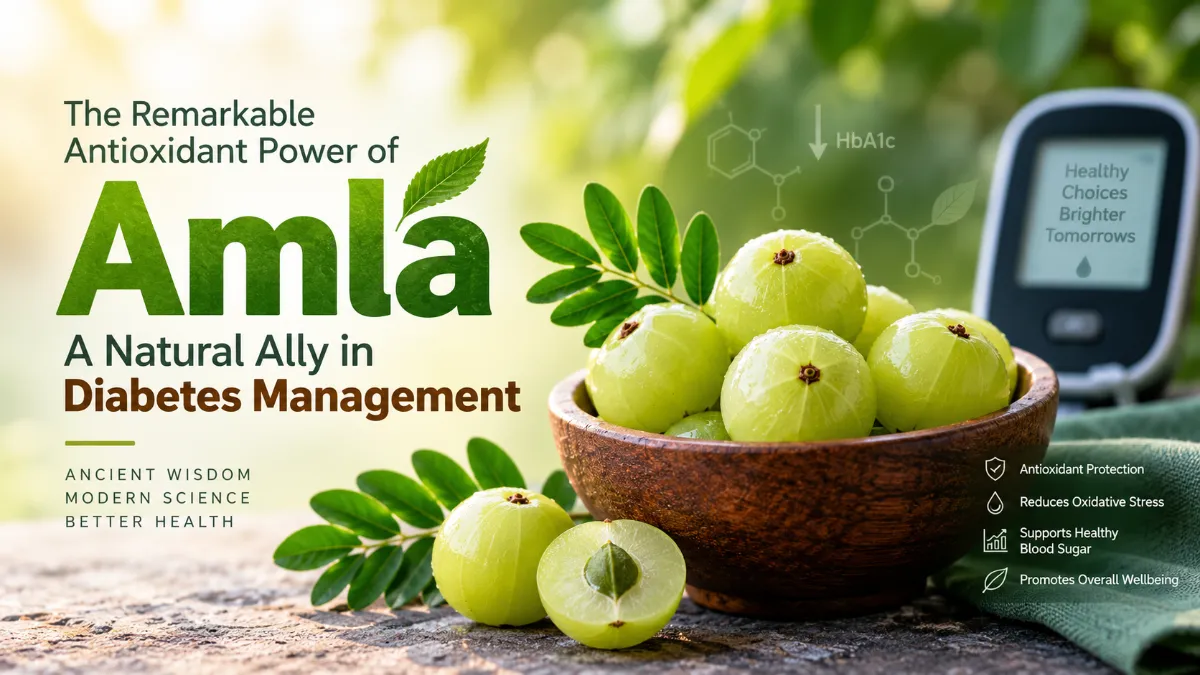
The Impact of Amla (Phyllanthus emblica) on Oxidative Stress and Glycated Hemoglobin
A deep dive into the antioxidant biochemistry of Amla (Phyllanthus emblica) and how its unique polyphenol complex reduces oxidative stress in diabetes, lowers glycated hemoglobin (HbA1c), and protects multiple organ systems from hyperglycemia-induced damage.
Article Snapshot
Comprehensive guide discussing The Impact of Amla (Phyllanthus emblica) on Oxidative Stress and Glycated Hemoglobin. Focuses on cellular pathophysiology, phytotherapy, low-GI nutrition, and integrative diabetic care.
- Understands cellular mechanisms of insulin resistance and beta cell stress.
- Highlights key botanical compounds like Gymnema, Curcumin, Amla, and Vijaysar.
- Explains sublingual delivery benefits in avoiding hepatic first-pass degradation.
- Provides dietary guidelines on low-GI rice, millets, barley, and fiber.
- Emphasizes clinical laboratory validation and integrative organ protection.
Medical Review & Verification
In the pharmacopoeia of Ayurvedic medicine, few botanicals command the reverence accorded to Amla—the fruit of Phyllanthus emblica (also known as Emblica officinalis). Celebrated in Ayurvedic texts as one of the three fruits comprising the revered Triphala formulation, and described as a rasayana (rejuvenating tonic) of particular potency for metabolic health, Amla has attracted intense modern scientific scrutiny—particularly in the context of diabetes management. The emerging biochemical and clinical evidence is compelling: Amla's unique polyphenol complex demonstrates remarkable antioxidant potency, specific anti-glycation activity, and meaningful reductions in glycated hemoglobin (HbA1c) in clinical studies.
The Phytochemical Arsenal of Amla: Beyond Simple Vitamin C
While Amla is widely known as a rich source of vitamin C—containing approximately 600–900 mg of ascorbic acid per 100 grams of fresh fruit, ranking among the highest plant sources globally—reducing its antioxidant activity to ascorbic acid content alone significantly understates its biochemical complexity. In fact, the antioxidant capacity of Amla fruit is paradoxically well-preserved even upon heat processing—a situation inconsistent with simple ascorbic acid activity, which is rapidly destroyed by heat. This heat stability has been explained by the presence of tannin-bound ascorbic acid complexes that protect vitamin C from oxidative destruction during processing.
The dominant bioactive compounds in Amla include: emblicanin-A and emblicanin-B (acyl glucosyl tannins unique to Phyllanthus emblica), punigluconin, pedunculagin, phyllemblin, gallic acid, ellagic acid, chebulic acid, corilagin, quercetin, kaempferol, and luteolin. This constellation of low-molecular-weight hydrolyzable tannins and polyphenols forms a remarkably potent and complementary antioxidant network—with different molecular species addressing different reactive oxygen species and different tissue compartments.
Oxidative Stress in Diabetes: The Biochemical Battlefield
Chronic hyperglycemia generates oxidative stress through multiple intersecting biochemical pathways that collectively overwhelm the physiological antioxidant defense systems of pancreatic, vascular, renal, neurological, and retinal tissues. The four primary pathways identified by Brownlee's landmark unifying hypothesis—polyol pathway flux, advanced glycation end-product accumulation, protein kinase C activation, and hexosamine pathway flux—all converge on a common endpoint: mitochondrial superoxide overproduction.
Superoxide dismutase (SOD) normally converts superoxide (O₂⁻) to hydrogen peroxide (H₂O₂), which is then neutralized by catalase or glutathione peroxidase. When superoxide production overwhelms this capacity, it reacts with nitric oxide to produce peroxynitrite, with iron to generate hydroxyl radicals via the Fenton reaction, and participates in lipid peroxidation chain reactions that damage cell membranes. Markers of this oxidative damage—including malondialdehyde (MDA), 8-isoprostane, 4-hydroxynonenal, and 8-hydroxy-2'-deoxyguanosine (8-OHdG)—are consistently elevated in people with Type 2 diabetes compared to normoglycemic controls, and their concentrations correlate with the severity of diabetic complications.
Amla Polyphenols as Multi-Spectrum Antioxidants
The antioxidant mechanisms of Amla's polyphenol complex operate across multiple biochemical dimensions simultaneously, providing comprehensive oxidative stress protection that simple antioxidant vitamins cannot replicate.
Direct Radical Scavenging
Emblicanins, gallic acid, and ellagic acid from Amla are potent direct radical scavengers, donating hydrogen atoms from their phenolic hydroxyl groups to neutralize reactive oxygen and nitrogen species. The ORAC (Oxygen Radical Absorbance Capacity) value of Amla fruit extract is extraordinary—estimated at 261,500 μmol TE/100g (trolox equivalent antioxidant capacity), exceeding the antioxidant capacity of blueberries (4,669 μmol TE/100g) by more than 50-fold, making it one of the highest ORAC-value natural substances characterized.
The polyphenol structure of emblicanins provides multiple hydroxyl groups capable of sequential hydrogen donation, allowing each molecule to scavenge multiple radical equivalents before becoming non-reactive. This makes Amla tannins remarkably efficient antioxidants on a molar basis, providing extended radical-quenching capacity from each administered molecule.
Endogenous Antioxidant Enzyme Upregulation
Beyond direct radical scavenging, Amla polyphenols—particularly gallic acid and ellagic acid—activate the Nrf2 (nuclear factor erythroid 2-related factor 2) transcription pathway, the master regulator of cellular antioxidant gene expression. Nrf2 activation upregulates the expression of superoxide dismutase, catalase, glutathione peroxidase, heme oxygenase-1, NAD(P)H quinone oxidoreductase (NQO1), and the rate-limiting enzymes of glutathione biosynthesis—glutamate-cysteine ligase and glutathione synthetase. This genomic antioxidant induction creates a sustained, self-regenerating antioxidant capacity that persists well beyond the plasma half-life of the ingested polyphenols.
Animal studies consistently demonstrate that Amla extract administration in diabetic models significantly increases erythrocyte and hepatic SOD, catalase, and glutathione peroxidase activities while reducing lipid peroxidation indices (MDA)—providing objective biochemical evidence for both direct scavenging and enzyme upregulation activities.
Metal Chelation
Transition metal ions—particularly iron (Fe²⁺) and copper (Cu²⁺)—catalyze the Fenton and Haber-Weiss reactions that generate the most reactive and damaging hydroxyl radical (•OH) from hydrogen peroxide. Amla polyphenols, particularly ellagic acid and chebulic acid, form stable chelate complexes with iron and copper, sequestering these metal ions and preventing their participation in hydroxyl radical-generating reactions. This metal chelation activity provides an antioxidant mechanism complementary to direct radical scavenging and enzyme upregulation.
Glycated Hemoglobin (HbA1c) Reduction: Clinical Evidence
HbA1c—glycated hemoglobin—is formed through a non-enzymatic Maillard reaction between circulating glucose and the N-terminal valine residues of hemoglobin beta chains. The rate of glycation is directly proportional to ambient glucose concentration over the preceding 8–12 week erythrocyte lifespan, making HbA1c the definitive clinical marker for average blood glucose control over this period. Reducing HbA1c by even modest amounts—0.5–1.0%—translates to significant risk reductions for microvascular complications: each 1% HbA1c reduction corresponds to approximately 37% risk reduction for microvascular outcomes and 21% risk reduction for diabetes-related deaths in epidemiological analyses.
Clinical evidence for Amla-mediated HbA1c reduction comes from multiple randomized controlled trials. A rigorously conducted double-blind placebo-controlled trial published in the European Journal of Clinical Nutrition tested standardized Amla powder (2.5 g twice daily, standardized to emblicanin content) against placebo in 149 Type 2 diabetes patients over 12 weeks. The Amla group demonstrated a mean HbA1c reduction of 0.6% versus 0.2% in placebo (p<0.01), with additional significant improvements in fasting glucose, postprandial glucose, total cholesterol, LDL cholesterol, and triglycerides. Importantly, liver and kidney function parameters remained within normal ranges throughout the study, confirming safety alongside efficacy.
A separate 6-month open-label observational study from a Kerala-based specialized diabetic clinic, involving 78 patients supplementing Amla juice (30 mL standardized extract twice daily) as adjunct to standard care, reported mean HbA1c reduction of 0.9% alongside significant reductions in urinary microalbumin—an early marker of diabetic nephropathy—suggesting that Amla's renal protective antioxidant activity may offer additional benefit beyond glycemic control.
Anti-Glycation Activity: Protecting Proteins from Glucose Modification
Beyond reducing ambient hyperglycemia that drives HbA1c formation, Amla polyphenols demonstrate direct anti-glycation activity—inhibiting the Maillard reaction chemistry that modifies proteins across all body tissues, not just hemoglobin. Bovine serum albumin (BSA) glycation assay studies show that Amla extract inhibits AGE formation in a dose-dependent manner, with IC50 values comparable to aminoguanidine—the reference pharmaceutical anti-glycation agent used in research models.
This anti-glycation activity has particular significance for tissue proteins with long biological half-lives that accumulate glycation damage over extended periods—including lens crystallins (implicated in diabetic cataract), myelin proteins (relevant to neuropathy), collagen (central to retinopathy and nephropathy progression), and arterial wall proteins (contributing to macrovascular stiffness). By inhibiting both the carbonyl species responsible for protein cross-linking and the transition metal catalysts accelerating glycation chemistry, Amla provides broad-spectrum protein protection from the chronic hyperglycemia-driven molecular aging that underlies diabetic tissue complications.
Organ-Specific Protective Effects
Renal Protection
Diabetic nephropathy begins with glomerular hyperfiltration and mesangial expansion driven by oxidative stress, AGE accumulation, and TGF-β-mediated fibrosis in the renal glomerulus. Amla's antioxidant and anti-glycation activity, combined with its anti-inflammatory effects through NF-κB suppression, provides multi-mechanism renal protection. Animal studies demonstrate preserved glomerular filtration rates, reduced mesangial expansion, lower urinary albumin excretion, and reduced renal collagen content in Amla-supplemented diabetic animals compared to untreated diabetic controls.
Hepatic Protection
The liver is a primary site of both glucose homeostasis regulation and oxidative stress damage in diabetes. Amla polyphenols demonstrate hepatoprotective activity through Nrf2 activation, reduction of hepatic lipid peroxidation, improvement of hepatic glutathione status, and normalization of hepatic enzymatic activities (ALT, AST, alkaline phosphatase) that are characteristically elevated in diabetic hepatic steatosis.
Cardiovascular Protection
Amla's comprehensive antioxidant activity translates to meaningful cardiovascular benefit in clinical and preclinical studies. Reductions in LDL cholesterol oxidation reduce atherogenic lipoprotein modification; improved endothelial NO bioavailability from reduced oxidative inactivation promotes vasodilation; and anti-platelet aggregation activity from Amla tannins reduces thrombotic risk.
Optimal Forms and Dosing for Clinical Benefit
Clinical evidence supports Amla benefit from multiple product forms: fresh or dried fruit, standardized powder, aqueous extract, and juice concentrate. Standardized preparations characterized for emblicanin-A and emblicanin-B content provide the most reliable therapeutic consistency. Typical effective doses in clinical trials range from 500 mg to 3 grams of standardized Amla powder daily, or 20–30 mL of concentrated Amla juice twice daily. Safety is excellent across all studied dose ranges, with no hepatotoxic, nephrotoxic, or significant drug-interaction signals identified in systematic reviews of clinical safety data.
Sources and References
Frequently Asked Questions
Targeted botanical compounds help neutralize free radicals in pancreatic islet cells and enhance peripheral insulin receptor sensitivity.
Low-GI foods release glucose slowly into the bloodstream, avoiding postprandial glucose spikes and reducing insulin demand.