

Reading Packaged Food Labels: A Practical Guide for Indian Shoppers
The front of a food packet can look reassuring while leaving the most useful information hidden on the back.
Article Snapshot
The front of a food packet can look reassuring while leaving the most useful information hidden on the back. Words such as natural, multigrain, no added sugar, and high protein describe different features; they do not tell you everything about a product.
- Begin with the amount the label describes
- Compare like with like
- Read beyond the sugar line
Medical Review & Verification
The front of a food packet can look reassuring while leaving the most useful information hidden on the back. Words such as natural, multigrain, no added sugar, and high protein describe different features; they do not tell you everything about a product. For someone planning meals with diabetes, a better habit is to read the nutrition panel, ingredient list, and serving information together. You do not need to memorise every nutrient. A short, repeatable process can help you compare similar products and decide whether a packet fits the way you actually eat.
Begin with the amount the label describes
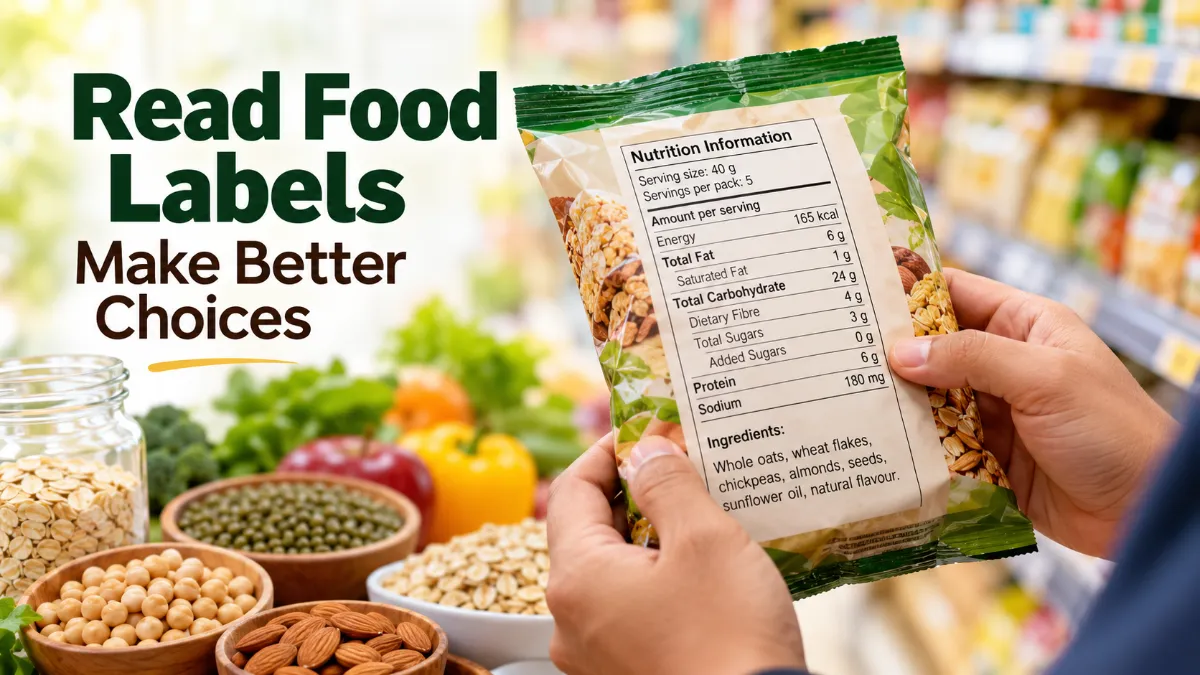
Find out whether the nutrition values are listed per serving, per one hundred grams, or both. Then compare that amount with your usual portion. A small packet may contain more than one stated serving. A breakfast powder may list nutrition for dry powder even though you prepare it with milk, sugar, or fruit. Those additions change the complete meal. Label formats differ between countries and manufacturers, so read the unit rather than assuming it. The FDA's explanation of serving size is helpful for understanding this distinction: a listed serving describes the label calculation and does not automatically prescribe the amount suitable for you.
Compare like with like
Imagine two fictional crackers. Product A lists thirty grams of carbohydrate per one hundred grams, while Product B lists twelve grams per forty-gram serving. These figures describe the same carbohydrate concentration. Comparing thirty with twelve directly would be misleading. Put both products on the same basis before choosing. You can use a phone calculator or write a quick note rather than doing mental arithmetic in a crowded shop. If your portion is sixty grams, the example would provide eighteen grams of carbohydrate. These are illustrative numbers, not the nutritional values of a real product or a recommended snack allowance.
Read beyond the sugar line
Total carbohydrate and total sugars answer different questions. Starch-containing foods can contribute substantial carbohydrate even when the sugar figure is low. The CDC notes that total sugars include naturally occurring and added sugars. Depending on the label, added sugars may be shown separately. For meal planning, look at the carbohydrate information alongside fibre, protein, and the portion you intend to eat. Ask your dietitian which numbers are most useful for your treatment approach. Do not improvise insulin calculations from an article. People who use meal-related insulin need education tailored to their prescribed regimen and monitoring method.
Use the ingredient list to understand the product
The ingredient list can explain why two similar-looking products differ. Look for the grains, pulses, oils, sweeteners, and other ingredients that make up the recipe. A multigrain product may combine several grains without being a whole-grain product. A no-added-sugar biscuit may still contain flour and other carbohydrate ingredients. Honey, syrups, and jaggery are not invisible simply because their names sound familiar. If an ingredient is unclear, ask the manufacturer or choose a simpler product that you understand. Also check allergen information when relevant; a product's suitability for glucose planning does not settle whether it is safe for an allergy.
Treat front-of-pack claims as questions
When a packet says high protein, ask how much protein your actual serving contains. When it says low GI, ask whether there is accessible testing information for that exact food and preparation. A claim about one ingredient does not establish the effect of the finished recipe. If the pack is promoted for people with diabetes, still inspect its nutrition panel. Marketing language cannot replace your personal meal plan. Glycemia Biotech products should be considered using the same careful process as any other products: actual ingredients, serving amounts, preparation instructions, and credible evidence matter more than a broad impression of wellness.
Consider sodium, fat, and everyday use
A diabetes-focused shopping decision should not depend on sugar alone. Depending on your care plan, sodium and the type and amount of fat may also matter. Compare products within the same category, such as two soups or two snack mixes, rather than expecting one universal score to rank every food. Think about how often you will use the item. A condiment eaten by the teaspoon and a staple eaten daily play different roles. If you have kidney disease or another condition requiring dietary limits, ask which label details you should prioritise. Your shopping method should reflect your actual health needs.
Build a small reference list
Take a photograph of the label for a product you buy often, or copy its serving information into a notebook. Record the portion you normally prepare and whether anything is added. At home, compare it with a second product without pressure from queues or promotions. Over time, create a short list of familiar choices instead of investigating every packet on every trip. Recheck labels occasionally because recipes and serving instructions can change. A useful list might include one breakfast option, one emergency pantry meal, and two snacks. The goal is to reduce repeated decisions while preserving room for preference and variety.
Put label reading into practice
At your next shopping trip, choose just one category to examine. Compare two products using the same weight basis, read their ingredient lists, and check the price for the amount you will actually use. Decide whether either offers a meaningful advantage over a familiar unpackaged alternative. You may discover that the simpler choice is also the cheaper one. If the information is incomplete or difficult to interpret, bring a label photograph to your dietitian. Careful shopping is a skill that develops through practice. It does not require perfect calculations, and it should not make eating feel like an examination.
Sources and References
Frequently Asked Questions
No. A food can contain starch or naturally occurring sugars even when no sugar has been added. Read total carbohydrate, ingredients, and serving size together. Your meal plan may need to account for the product regardless of the wording printed on the front.
Not necessarily. It is the amount used for the nutrition information. Your suitable portion depends on the complete meal and your individual needs. Compare the listed serving with what you actually eat, and ask a dietitian when you need help deciding quantities.
Compare the nutrition of the prepared portions. Check whether the powder's panel describes dry powder or the finished drink. Include milk, sugar, or other additions that you use. Comparing dry powder with a full drink without adjusting the basis can give a misleading result.
No. Price and marketing do not establish nutritional suitability. Evaluate the ingredients, actual portion, nutrition panel, and affordability. Familiar foods may serve the same purpose. Buy a speciality product only when you understand what it adds to your own routine and meal plan.
Photograph it and discuss it with your dietitian or pharmacist, depending on the product. You can also ask the manufacturer to clarify serving information. Bring details of your usual preparation and portion as well. Until you understand a new item, choosing a familiar alternative may be easier than guessing from its marketing claims.