

The Office Lunchbox: Planning Indian Workday Meals with Diabetes
A workday lunch plan has to survive meetings, commuting, limited storage, and the moment when someone orders takeaway.
Article Snapshot
A workday lunch plan has to survive meetings, commuting, limited storage, and the moment when someone orders takeaway. Nutrition advice that ignores these details rarely lasts.
- Map the actual workday
- Choose a simple meal structure
- Pack portions before the morning rush
Medical Review & Verification
A workday lunch plan has to survive meetings, commuting, limited storage, and the moment when someone orders takeaway. Nutrition advice that ignores these details rarely lasts. For a person with diabetes, the useful question is how to make a dependable meal available when it is needed. That can mean a packed lunch, a planned canteen choice, or a nearby alternative. This article focuses on organising those options using familiar Indian foods. It offers meal-planning examples rather than prescribed quantities, because appropriate portions and meal timing depend on your individual nutrition and treatment needs.
Map the actual workday
Start by listing the practical facts. When can you usually eat? Is there a refrigerator? Can food be reheated? Does your role involve driving, physical labour, or unpredictable breaks? How long will a lunchbox spend outside safe temperature control? These answers determine which meals are realistic. A beautifully planned box is not useful if you cannot store it safely or access it before a long meeting. If meal timing is important for your medicines, discuss that with your clinician and consider what workplace arrangement would help. You may only need to explain the practical need for a reliable break, rather than disclose every medical detail.
Choose a simple meal structure
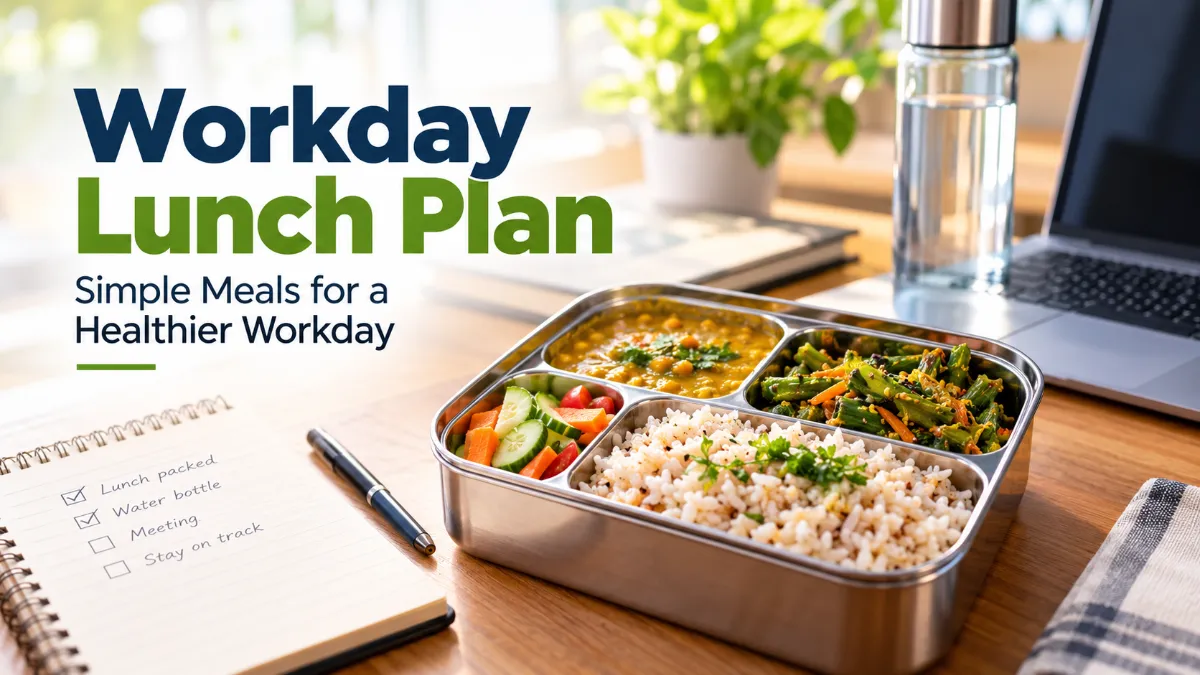
Plan the grain or other carbohydrate component, a suitable protein food, and vegetables together. For example, a box might contain a planned amount of rice, a dal dish, and a vegetable preparation. Another might use roti with an appropriate curry and vegetables. These examples are flexible starting points, not fixed menus. Pulses contribute carbohydrate as well as protein, and recipes vary. Ask a dietitian to help with the combinations and quantities you use most often. The CDC meal-planning guidance supports considering the full meal rather than treating an individual food as automatically good or bad.
Pack portions before the morning rush
Decide which container represents your intended lunch portion and use it consistently. If you take leftovers, divide them after preparation instead of filling the box hurriedly from a large pot. Keep a note of the recipe when learning how a mixed dish fits your plan. Separate compartments can make grain, curry, and vegetables easier to identify, but an ordinary container can work just as well. Choose equipment that is easy to wash and carry. Expensive lunch accessories are unnecessary if they add inconvenience. The aim is a box that helps you serve the meal you planned with minimal daily effort.
Make the backup lunch specific
Everyone forgets a lunchbox occasionally. Identify two realistic alternatives before it happens: perhaps a canteen meal you can adapt or a nearby restaurant with predictable dishes. Write down what you would order and which extras you might decline or share. If portions are large, decide how to handle the remainder rather than automatically finishing it. Check whether an unsweetened drink is available. A specific backup is more useful than a vague intention to eat healthily. It also avoids the assumption that the only alternatives are skipping lunch or buying a packaged product marketed for diabetes.
Separate planned snacks from desk grazing
Snacks may be appropriate for some people and unnecessary for others. Discuss them in the context of your meal timing, hunger, and medicine regimen. If you choose a snack, portion it into a container rather than keeping a large open packet beside your keyboard. Write down drinks as well as foods when reviewing your workday routine. Sweetened tea served repeatedly can become easy to overlook. Conversely, someone with a prescribed low-glucose treatment plan needs to keep their recommended rapid treatment accessible, rather than treating it as an ordinary snack. Keep the purpose of each item clear.
Reduce preparation work across the week
Choose a short rotation that shares ingredients. One vegetable preparation might accompany different lunches, while a familiar pulse dish can be planned for both dinner and the next day's meal when storage is safe. Keep a shopping list based on the rotation rather than on isolated recipes. If another household member can pack the box, agree on containers and quantities so that the plan is easy to follow. Review the workload honestly. A meal that requires an hour of additional cooking every evening may need simplification. Convenience can be part of a sensible plan when it solves a real barrier.
Keep food safety part of lunch planning
Cooked rice, curries, dairy foods, and other perishable items need safe handling. Cool and refrigerate food promptly, use appropriate cold transport when needed, and follow reliable local food-safety guidance for storage and reheating. Do not assume that a closed lunchbox makes a hot commute safe. If refrigeration is unavailable, choose an alternative that can be handled safely in those conditions. Food safety should be considered before debating which dish is nutritionally ideal. When in doubt about a meal that has been left out too long, replacing it is more sensible than relying on smell or appearance alone.
Review the plan as a work routine
At the end of the week, ask which lunches were eaten, which were abandoned, and why. Perhaps a dish leaked, the office microwave was unavailable, or meetings repeatedly pushed the meal later. Those are design problems you can solve. If recommended glucose monitoring shows recurring concerns, bring the meal notes and timing to your clinician rather than changing medicine independently. Glycemia Biotech's educational approach encourages practical routines grounded in individual care. A good lunchbox plan should make the workday easier while supporting nutrition, safe food handling, and treatment consistency. It does not need to look impressive to be useful.
Sources and References
Frequently Asked Questions
No single rule applies to everyone. The portion, recipe, accompaniments, and your personal plan matter. A dietitian can help you design a familiar rice-based lunch. Include the complete meal when discussing quantities rather than evaluating rice separately from dal, vegetables, and drinks.
Use the plan agreed with your clinician, especially if your medicines can cause low glucose. Keep any recommended supplies accessible and discuss a reliable meal break with your workplace when needed. Do not improvise medicine changes or repeatedly ignore a timing problem that affects your care.
Not everyone does. Hunger, activity, meal timing, and medicines influence the answer. Discuss snacks with your care team and plan a suitable portion if needed. Regular desk grazing from a large packet is different from a snack included deliberately in your daily eating plan.
Assess safe transport and storage before choosing dishes. An insulated container with appropriate cooling may help, or you may need a different meal source. Follow reliable food-safety guidance. Do not leave perishable food in a warm bag for hours and assume reheating will solve every risk.
Yes, if you can make a practical, suitable choice within your plan and budget. Identify predictable options and discuss portions with your dietitian. Account for drinks and side dishes. Check the opening hours against your actual meal break. Having a clear backup can be more reliable than depending on willpower when you are hungry.