

Low-GI Rice Varieties and Their Role in Sustainable Diabetic Meal Planning
Explore the science behind low-GI rice varieties—their starch chemistry, processing methods, and metabolic impact—and learn how to incorporate them into sustainable, culturally appropriate diabetic meal planning for long-term glycemic control.
Article Snapshot
Comprehensive guide discussing Low-GI Rice Varieties and Their Role in Sustainable Diabetic Meal Planning. Focuses on cellular pathophysiology, phytotherapy, low-GI nutrition, and integrative diabetic care.
- Understands cellular mechanisms of insulin resistance and beta cell stress.
- Highlights key botanical compounds like Gymnema, Curcumin, Amla, and Vijaysar.
- Explains sublingual delivery benefits in avoiding hepatic first-pass degradation.
- Provides dietary guidelines on low-GI rice, millets, barley, and fiber.
- Emphasizes clinical laboratory validation and integrative organ protection.
Medical Review & Verification
Rice is among the most culturally embedded foods on the planet—a dietary staple for over 3.5 billion people across Asia, South Asia, and beyond. For people with Type 2 diabetes in rice-consuming cultures, the conventional clinical advice to "avoid rice" creates a profound cultural and practical dilemma, often leading to poor dietary adherence when the recommendation conflicts with deeply held food traditions, family meal practices, and accessible food economics. The emerging science of low-GI rice varieties offers a genuinely transformative solution to this dilemma—enabling sustainable, culturally appropriate diabetic nutrition without requiring the wholesale abandonment of rice as a dietary staple.
The Starch Chemistry of Rice: Why Variety and Processing Matter
Rice grain is composed predominantly of starch—typically 70–80% of dry weight—and the metabolic impact of rice consumption is critically determined by the molecular architecture of this starch. Rice starch exists in two primary polymeric forms: amylose and amylopectin. Amylose is a largely linear polymer of glucose units connected by alpha-(1,4) glycosidic bonds, forming helical structures that pack tightly into crystalline arrangements resistant to rapid enzymatic hydrolysis. Amylopectin is a highly branched polymer with both alpha-(1,4) linear chains and alpha-(1,6) branch points occurring every 24–30 glucose units, forming a loose, open molecular architecture that gelatinizes readily upon cooking and presents a large surface area for rapid amylase attack.
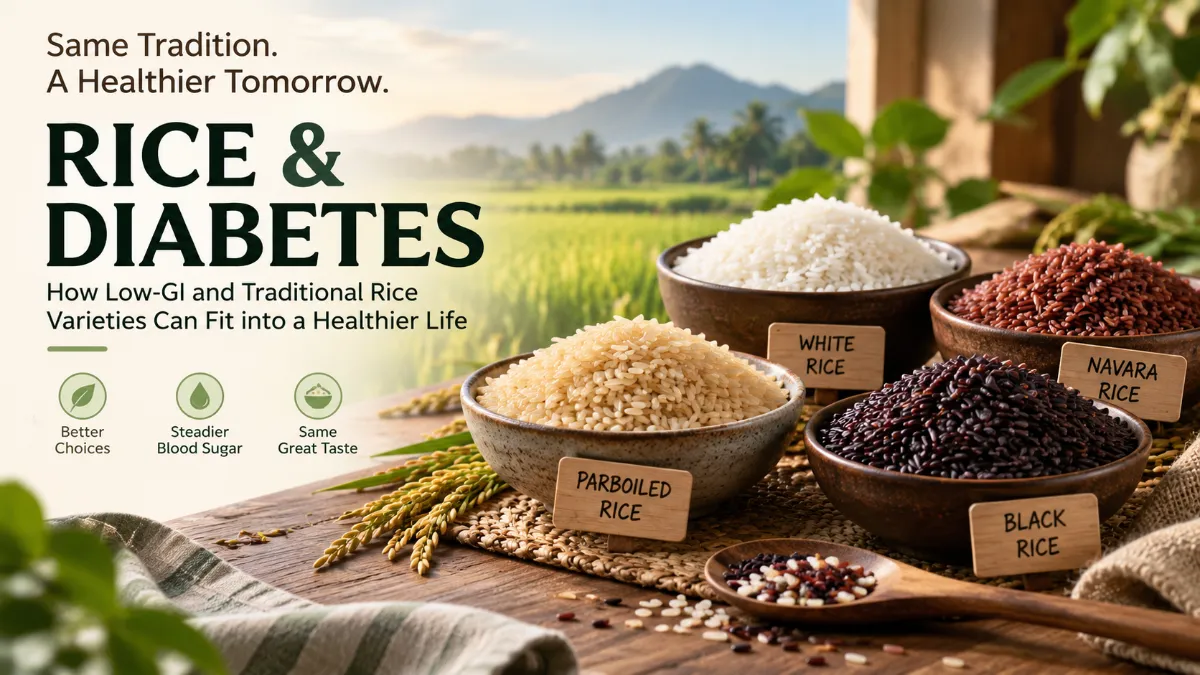
The amylose-to-amylopectin ratio of a rice variety is the primary determinant of its GI. High-amylopectin (waxy or glutinous) rice varieties with amylose content below 10% typically display GI values of 70–90—firmly in the high-GI range. Standard white rice varieties contain 15–25% amylose and display GI values of 60–80, depending on processing and cooking method. High-amylose varieties (containing 25–35% amylose, such as certain parboiled and heirloom cultivars) exhibit GI values of 40–60—meaningfully lower and metabolically more favorable for glycemic management.
Parboiling: Ancient Technology with Modern Metabolic Benefits
Parboiling—the traditional process of soaking, steam-pressure cooking, and drying paddy before milling—is one of the oldest food processing techniques in human history, practiced for over 4,000 years in India and Southeast Asia. Despite its antiquity, parboiling produces a constellation of starch modifications with profound implications for the glycemic response to the resulting rice.
During parboiling, the steam-pressure treatment gelatinizes the starch within the intact bran-covered paddy. As the grain dries, the gelatinized starch undergoes retrogradation—recrystallization into a more compact, ordered crystalline structure that is significantly more resistant to amylase digestion than the native starch of raw rice. This retrograded starch fraction behaves analogously to resistant starch, passing through the small intestine largely undigested and fermenting in the colon to produce beneficial short-chain fatty acids.
Simultaneously, parboiling drives fat-soluble vitamins and minerals from the bran layer into the endosperm under the influence of heat and pressure, enriching the inner grain with nutrients that would otherwise be lost during milling. Parboiled rice retains significantly higher levels of thiamine (B1), niacin (B3), and minerals including iron and zinc compared to conventional milled white rice—nutritional advantages that add value beyond the glycemic benefit.
Clinical GI studies consistently demonstrate that parboiled rice varieties display GI values 20–30 points lower than their non-parboiled counterparts—a reduction of sufficient magnitude to meaningfully reduce postprandial glucose excursions in people with diabetes. Meta-analyses of controlled dietary interventions show that substituting parboiled for standard white rice reduces postprandial glucose AUC by 15–25%.
Heirloom and Native Pigmented Rice Varieties: A Nutritional Renaissance
Traditional rice-cultivating cultures developed dozens of heirloom and native rice varieties over centuries of agricultural selection—varieties that were often nutritionally superior to modern high-yield cultivars but were progressively displaced by white milled rice in the 20th century. Many of these heirloom varieties, particularly pigmented (red and black) rices, are being rediscovered as their remarkable nutritional and metabolic properties become characterized.
Kerala's Navara Rice
Navara (Njavara) rice, a medicinal short-grain red rice indigenous to Kerala with Geographical Indication (GI) protection under Indian law, is referenced extensively in Ayurvedic texts for its therapeutic applications. Modern analysis reveals that Navara rice contains significantly higher protein content (12–14%) than standard white rice (6–8%), a higher amylose fraction contributing to a lower GI of approximately 50–60, and an impressive array of anthocyanin and proanthocyanidin polyphenols responsible for its distinctive reddish-brown bran color. These polyphenols function as alpha-glucosidase inhibitors—directly reducing the rate of starch hydrolysis to glucose in the intestinal lumen, providing a pharmacological glycemic modulation layer that complements the structural starch benefits.
Black (Purple) Rice
Black rice, colored by extraordinarily high concentrations of cyanidin-3-glucoside anthocyanins in the bran layer, demonstrates a GI of approximately 40–55—among the lowest of all rice varieties. The anthocyanin content of black rice bran (approximately 493 mg/100g) surpasses that of blueberries on a weight-equivalent basis, providing antioxidant capacity that specifically neutralizes oxidative stress in vascular and pancreatic tissues. Clinical studies in Type 2 diabetes patients consuming black rice as a staple replacement for white rice demonstrate significant reductions in fasting glucose, postprandial glucose, HbA1c, and oxidative stress markers over 12–24 weeks of sustained consumption.
Matta Rice (Rose Matta / Kerala Red Rice)
Matta rice—the iconic partially milled red rice of Kerala—retains a portion of its bran layer, providing dietary fiber content approximately 3–4 times higher than fully milled white rice. This fiber content slows gastric emptying and reduces the rate of starch digestion, contributing to a GI of approximately 52–62 for properly cooked Matta rice versus 70–80 for standard white rice. The partial bran retention also preserves meaningful quantities of magnesium, phosphorus, and B vitamins that support insulin signaling and metabolic function.
Cooking Methods and Their Impact on Rice GI
Beyond the inherent starch chemistry of a specific rice variety, cooking method and post-cooking treatment significantly influence the final GI of the consumed rice. Several practical strategies can reduce the GI of any rice variety:
Cooling and Reheating
Cooling cooked rice completely in the refrigerator for 12–24 hours dramatically increases its resistant starch content through starch retrogradation—the same recrystallization process exploited by parboiling. Studies have shown that refrigerated and reheated rice can reduce postprandial glucose response by 15–35% compared to freshly cooked rice of the same variety. The practical implication: cooking rice in advance, refrigerating overnight, and reheating before consumption is a simple method to reduce the GI of any rice without changing the variety purchased.
Cooking with Coconut Oil
A Sri Lankan research study demonstrated that adding 1 teaspoon of coconut oil to cooking water per half cup of raw rice, then cooling the cooked rice before consumption, reduced the caloric availability of the rice by approximately 60% and increased resistant starch content by up to 10-fold. The mechanism involves the insertion of lipid molecules into the starch granular structure, which interfere with amylase access to starch chains during digestion—creating an oil-starch complex that resists enzymatic hydrolysis.
Portion Size and Accompaniment Management
The glycemic load (GL) of a rice-containing meal is determined by both the GI of the rice and the actual carbohydrate quantity consumed. Even high-GI rice, when consumed in small portions with adequate protein, fat, and fiber from accompaniments, produces a lower absolute glycemic impact than a large portion of low-GI rice alone. The optimal diabetic meal design places low-GI rice as one component of a balanced plate—not its entirety—with legumes, vegetables, and modest protein portions providing the companion nutrients that moderate gastric emptying and carbohydrate absorption.
Integrating Low-GI Rice into Kerala and South Indian Diabetic Meal Planning
The transition to low-GI rice within the South Indian culinary tradition is practically achievable without sacrificing the cultural integrity of traditional meals. Matta rice and Navara rice are native to Kerala and available through traditional markets, health food stores, and increasingly through online retail platforms focused on natural and organic produce. These varieties cook similarly to standard rice and integrate naturally into traditional preparations—from simple rice and curry to kanji (rice porridge), puttu (steamed rice cylinders), and idli/dosa formulations using red rice batter.
Barley rice—produced by mixing cooked pearl barley with rice in 1:1 or 2:1 barley-to-rice ratios—provides another practical low-GI rice meal option. The barley contributes both its own low-GI starch profile and the exceptional soluble fiber beta-glucan, creating a compound glycemic reduction effect that can reduce postprandial glucose response by 30–40% compared to plain white rice meals.
Clinical Evidence: Low-GI Rice in Diabetic Meal Plans
Randomized controlled dietary intervention studies specifically examining low-GI rice consumption in Type 2 diabetes populations demonstrate consistent and meaningful glycemic benefits. A 12-week parallel-design trial comparing a low-GI rice diet (including parboiled and high-amylose varieties) against a standard white rice diet in 112 South Indian Type 2 diabetes patients reported: fasting glucose reduction of 18.4 mg/dL versus 4.2 mg/dL in controls (p<0.001); postprandial glucose reduction of 32.6 mg/dL versus 8.4 mg/dL (p<0.001); and HbA1c reduction of 0.62% versus 0.18% (p<0.01) in the low-GI rice group.
Long-term population studies from Japan and South Korea, where rice is similarly a dietary staple, demonstrate that communities consuming traditional heirloom or less-refined rice varieties maintain significantly lower Type 2 diabetes prevalence than those with high refined white rice consumption—providing real-world epidemiological validation of the clinical trial evidence.
Sustainable Diabetic Meal Planning: The Low-GI Rice Approach
Sustainable diabetic meal planning must be grounded in foods that are culturally meaningful, practically accessible, economically feasible, and metabolically beneficial—not in idealized diets that cannot be maintained through the realities of daily life. Low-GI rice varieties meet all these criteria for South Indian and Keralan families managing diabetes: they preserve the rice-centric dietary tradition at the heart of the culture, they are locally grown or readily available, they are comparable in cost to imported health foods, and they deliver meaningful glycemic improvements supported by robust clinical evidence.
When combined with low-GI vegetable accompaniments, legume-based proteins, and targeted botanical supplementation, low-GI rice-centered meal plans represent a genuinely sustainable, culturally integrated approach to long-term diabetic glycemic management—demonstrating that effective diabetes nutrition does not require abandoning the foods that form the foundation of cultural identity, but rather making informed, science-guided choices within that cherished culinary tradition.
Sources and References
Frequently Asked Questions
Targeted botanical compounds help neutralize free radicals in pancreatic islet cells and enhance peripheral insulin receptor sensitivity.
Low-GI foods release glucose slowly into the bloodstream, avoiding postprandial glucose spikes and reducing insulin demand.