


The Dual Power of Dietary Fiber and Chromium in Enhancing Insulin Sensitivity
Learn how the combination of soluble dietary fiber—specifically beta-glucans from barley—and the essential trace mineral chromium works at the cellular level to improve insulin receptor sensitivity and optimize glucose regulation.
Article Snapshot
This article explains the dual action of soluble dietary fiber (specifically beta-glucans in barley) and chromium in reversing insulin resistance. Soluble fiber slows glucose absorption in the gut, while chromium acts as an intracellular cofactor (chromodulin) that amplifies insulin receptor signaling, promoting glucose clearance.
- Insulin resistance involves impaired signaling at the cell membrane receptor.
- Soluble fiber forms a gel in the intestines, slowing carbohydrate digestion.
- Beta-glucans in barley reduce post-meal spikes and lower cholesterol.
- Chromium binds to chromodulin to amplify insulin receptor tyrosine kinase activity.
- Glycemia Biotech offers Barley Rice and chromium-rich organic Amla Juice.
Medical Review & Verification
Understanding Insulin Resistance at the Cellular Level
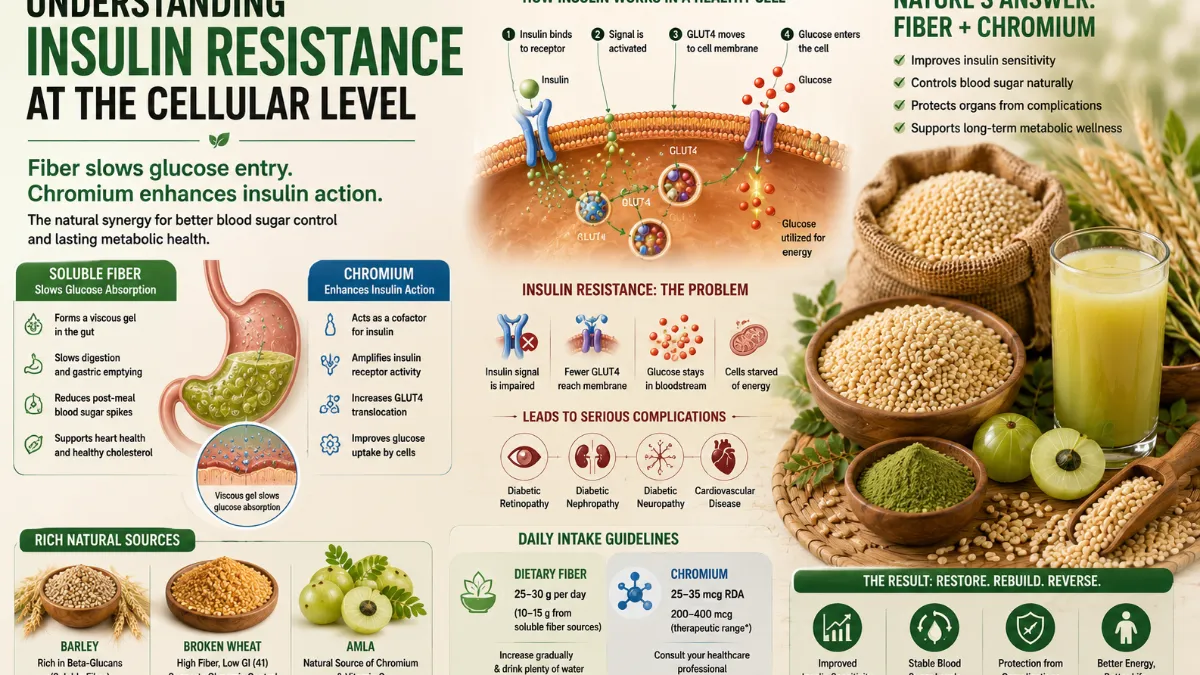
To effectively manage and potentially reverse Type 2 diabetes, one must understand the physiological concept of insulin resistance. Insulin is a polypeptide hormone secreted by the pancreas that acts as a key to unlock body cells, allowing glucose to enter and be converted into energy. When insulin binds to its receptor on the cell membrane, it triggers a cascade of intracellular signals that eventually causes glucose transporter proteins (specifically GLUT4) to migrate to the cell surface, opening channels for glucose absorption. In a state of insulin resistance, this signaling pathway is impaired. Even though the pancreas may produce abundant insulin, the receptors on skeletal muscle, fat, and liver cells fail to respond effectively. As a result, glucose remains in the bloodstream, leading to elevated blood sugar levels, while cells are starved of energy. Reversing this condition requires natural compounds that can restore the structural integrity and sensitivity of insulin receptors. Two of the most clinically proven dietary components for this purpose are soluble dietary fiber and the trace mineral chromium.
Dietary Fiber: Soluble vs. Insoluble Fiber and Glycemic Control
Dietary fiber is the carbohydrate portion of plant foods that the human digestive system cannot digest or absorb. It is broadly categorized into two types, each playing a distinct role in metabolic health:
- Insoluble Fiber: Found in wheat bran, vegetables, and whole grains, this fiber does not dissolve in water. It passes through the digestive tract largely intact, promoting regular bowel movements and supporting gut health.
- Soluble Fiber: Found in barley, oats, beans, and certain fruits, this fiber dissolves in water to form a viscous, gel-like substance. It is this gel-forming property that makes soluble fiber exceptionally valuable for glucose regulation.
When you consume a meal rich in soluble fiber, the gel-like substance slows down the rate at which food leaves the stomach (gastric emptying) and enters the small intestine. This slow transition means that digestive enzymes break down carbohydrates into glucose at a much slower rate. Additionally, the viscous gel coats the lining of the small intestine, acting as a physical barrier that slows the absorption of glucose into the bloodstream. The result is a smooth, gradual increase in post-meal blood sugar levels rather than a sharp, steep spike. This gradual release reduces the immediate demand on the pancreas to secrete high volumes of insulin, protecting the beta cells from exhaustion.
The Power of Beta-Glucans in Barley and Whole Grains
Among the various types of soluble fiber, beta-glucan—a polysaccharide found in high concentrations in barley and oats—is highly regarded for its metabolic benefits. Beta-glucans are long-chain carbohydrates that are highly viscous even at low concentrations. Clinical studies have consistently shown that consuming barley beta-glucans helps lower both postprandial glucose levels and circulating insulin. Furthermore, beta-glucan is fermented by beneficial bacteria in the colon, producing short-chain fatty acids (SCFAs) like propionate and acetate. These SCFAs enter the portal vein and travel to the liver, where they inhibit gluconeogenesis (the production of new glucose by the liver) and improve hepatic insulin sensitivity. Regular consumption of beta-glucans is also associated with reduced LDL cholesterol, providing double protection for individuals with diabetes who face an elevated risk of cardiovascular disease.
Chromium: The Essential Trace Mineral and Insulin Cofactor
While soluble fiber works primarily in the digestive tract to manage glucose absorption, the trace mineral chromium works directly at the cellular level to enhance insulin action. Chromium is an essential micronutrient that the body requires in minute amounts. It plays a critical role in carbohydrate and lipid metabolism by acting as a physiological cofactor for insulin. The biochemical mechanism of chromium is fascinating. When insulin binds to its receptor on the cell membrane, it triggers the uptake of chromium into the cell. Inside the cell, chromium binds to an oligopeptide called apochromodulin to form active chromodulin. This chromodulin molecule then binds directly to the intracellular portion of the insulin receptor, amplifying its tyrosine kinase activity. This amplification significantly increases the downstream signaling cascade, leading to the rapid translocation of GLUT4 glucose transporters to the cell membrane. In simple terms, chromium acts as an amplifier that makes insulin work much more efficiently. Clinical research has shown that chromium deficiency is closely linked to glucose intolerance and insulin resistance, and supplementing with bioavailable chromium can help lower fasting blood glucose and improve HbA1c levels in individuals with Type 2 diabetes. Chromium is primarily absorbed in the small intestine, and its absorption is enhanced when consumed alongside organic acids like citric acid and Vitamin C, which are naturally abundant in Amla.
Lipotoxicity: How Elevated Lipids Block Insulin and How Fiber Helps
A major cause of insulin resistance is lipotoxicity, which occurs when excess free fatty acids accumulate in tissues like skeletal muscle and the liver. These fatty acids break down into toxic metabolites (such as diacylglycerols and ceramides) that disrupt the insulin signaling pathway, preventing the glucose transporters from opening. This is why many diabetic patients also suffer from high cholesterol and triglycerides. Soluble fiber plays an indirect role here by binding to bile acids in the intestines, forcing the liver to consume circulating LDL cholesterol to produce more bile. This lowers overall blood lipid levels, reducing the lipid burden on tissues and helping to clear the pathways that block insulin receptors, thereby restoring insulin sensitivity.
Daily Guidelines and Dosage Recommendations
For individuals looking to utilize soluble fiber and chromium for blood sugar control, it is helpful to understand the recommended daily amounts:
- Dietary Fiber: Health organizations recommend a daily intake of 25 to 30 grams of dietary fiber for adults, with at least 10 to 15 grams coming from soluble fiber sources (such as barley or oats). When increasing fiber intake, it is important to do so gradually over several weeks and drink plenty of water to prevent digestive discomfort.
- Chromium: The recommended daily intake of chromium for adults ranges from 25 to 35 micrograms (mcg) per day. However, clinical studies supporting glucose regulation and insulin sensitivity often utilize higher, therapeutic doses ranging from 200 to 400 mcg per day, under the guidance of a qualified healthcare professional.
By monitoring these numbers and incorporating functional foods, you can ensure your body receives optimal levels of these essential nutrients.
The Synergistic Effect of Combining Fiber and Chromium
When soluble fiber and chromium are combined, they create a powerful two-step defense against blood sugar spikes and insulin resistance. Soluble fiber manages the entry of glucose into the system from the digestive tract, ensuring a slow, steady supply. Meanwhile, chromium ensures that the body's cells are highly sensitive to insulin, allowing them to quickly and efficiently clear this glucose from the bloodstream. This synergy helps maintain stable, flatline glucose levels throughout the day, preventing the energy crashes, sugar cravings, and metabolic strain that characterize poorly managed diabetes. Over time, this stable environment allows the pancreas to rest and recover, supporting long-term metabolic wellness.
Glycemia Biotech's Targeted Nutritional Solutions
At Glycemia Biotech, we design our products to leverage these natural biochemical synergies. To support healthy fiber intake, we offer premium Barley Rice and Powders, which are 100% natural and rich in heart-healthy beta-glucans. Replacing white rice with our premium barley rice is an easy, delicious way to lower the glycemic load of your meals and support active blood sugar control. Additionally, our hygienically packaged Broken Wheat (bulgur wheat) offers a high-fiber, magnesium-rich alternative with a low Glycemic Index of 41. To ensure adequate chromium intake, we provide organic, nutrient-dense Amla Juice. Amla (Indian Gooseberry) is naturally rich in chromium, as well as powerful antioxidants and Vitamin C, which help regulate blood glucose, protect blood vessels, and boost immunity. By integrating Glycemia Biotech's targeted nutritional products into your diet, you can easily harness the dual power of dietary fiber and chromium to enhance your insulin sensitivity and cultivate lasting wellness.
Sources and References
Frequently Asked Questions
Chromium acts inside the cell by binding with a protein to form chromodulin. Chromodulin binds to the insulin receptor, amplifying its signal and increasing glucose absorption.
Beta-glucans form a viscous gel that slows down glucose absorption, reduces cholesterol levels, and ferments into short-chain fatty acids that improve liver insulin sensitivity.