


Rebuilding the Pancreas: Scientific Perspectives on Beta Cell Regeneration and Diabetes Reversal
Explore the cellular biology of pancreatic beta cells, the science behind beta cell regeneration, and the clinical approach of Glycemia Anti Diabetic Clinic in Kerala to support natural insulin production.
Article Snapshot
This article reviews the biological pathways of pancreatic beta cell repair (proliferation, neogenesis, redifferentiation). It details the clinical protocols of Glycemia Anti Diabetic Clinic (https://www.glycemia.in/) that target beta cell regeneration to achieve diabetes reversal. It highlights the scientific validation of U-Glycemia at Amala Cancer Research Center, CFTRI, BARC, and CSIR.
- Beta cell exhaustion is driven by metabolic stress, glucotoxicity, and lipotoxicity.
- Regeneration can occur via proliferation, neogenesis, and redifferentiation.
- Glycemia Anti Diabetic Clinic in Kerala focuses on restoring pancreatic function.
- U-Glycemia supplement is clinically tested at Amala Cancer Research Center.
- Research is backed by validation from CFTRI, BARC, and CSIR.
Medical Review & Verification
The Paradigm Shift: From Managing Symptoms to Restoring Function
For decades, the standard medical consensus regarding Type 2 diabetes has been that it is a chronic, progressive, and ultimately irreversible disease. Under this conventional treatment model, therapeutic interventions focus almost exclusively on managing symptoms—specifically, lowering blood glucose levels. When a patient is diagnosed, they are typically prescribed oral medications that force the pancreas to secrete more insulin or decrease hepatic glucose production. As the disease progresses and the pancreas becomes increasingly exhausted, the dosage is elevated, and eventually, the patient is transitioned to exogenous insulin injections. While this approach is necessary to prevent acute complications, it does not address the underlying pathology of the disease: the progressive loss of functional pancreatic beta cells. However, recent breakthroughs in regenerative medicine and clinical endocrinology are challenging this fatalistic view. Science now shows that the pancreas possesses a remarkable capacity for self-repair. By understanding the biological mechanisms of pancreatic regeneration, we can shift the treatment paradigm from lifelong symptom management to actual pancreatic restoration and diabetes reversal.
Understanding Pancreatic Beta Cells and the Pathology of Exhaustion
The pancreas is a dual-function organ, possessing both exocrine tissue (involved in digestion) and endocrine tissue (involved in hormone production). The endocrine components are clustered in small, highly vascularized structures known as the islets of Langerhans. Within these islets reside specialized cells called beta cells, which are the sole site of insulin synthesis, storage, and secretion in the human body. In a healthy individual, beta cells act as sophisticated biological sensors, continuously monitoring blood glucose concentrations and releasing precise amounts of insulin to maintain glycemic balance. In Type 2 diabetes, this feedback loop is disrupted. Years of high carbohydrate intake, obesity, and physical inactivity lead to chronic insulin resistance, meaning the body's cells require higher amounts of insulin to absorb glucose. To compensate, beta cells work in overdrive, secreting massive amounts of insulin to keep blood sugar normal. This stage is known as hyperinsulinemia. However, this hyperactive state cannot be maintained indefinitely. The continuous metabolic stress, combined with the toxic effects of high glucose (glucotoxicity) and high circulating free fatty acids (lipotoxicity), eventually triggers cellular stress pathways. The beta cells begin to lose their structural integrity, undergo dedifferentiation (losing their identity as insulin-producing cells), or enter programmed cell death (apoptosis). As the mass of functional beta cells declines, insulin production falls, and overt diabetes sets in. Restoring the body's natural ability to regulate glucose requires finding ways to protect, revitalize, and regenerate these essential cells.
How Do We Monitor Beta-Cell Function? The Role of HOMA-IR and C-Peptide
In clinical practice, it is vital to have objective markers to measure both insulin resistance and the remaining function of the pancreas. The Homeostatic Model Assessment of Insulin Resistance (HOMA-IR) is a widely used index calculated from fasting glucose and fasting insulin levels. A high HOMA-IR score indicates severe insulin resistance, meaning the body's cells are closed to insulin. However, to measure the active capacity of the pancreas itself, clinicians rely on the C-Peptide test. When the precursor molecule proinsulin is processed in the beta cells, it splits into equal amounts of insulin and C-peptide. Unlike insulin, which is rapidly cleared by the liver, C-peptide remains stable in the bloodstream for longer, making it a highly accurate marker of pancreatic insulin-secreting capacity. Monitoring C-peptide levels allows clinicians to track the actual recovery and regeneration of beta cells over the course of a restorative treatment program.
The Science of Beta Cell Regeneration: Cellular Pathways
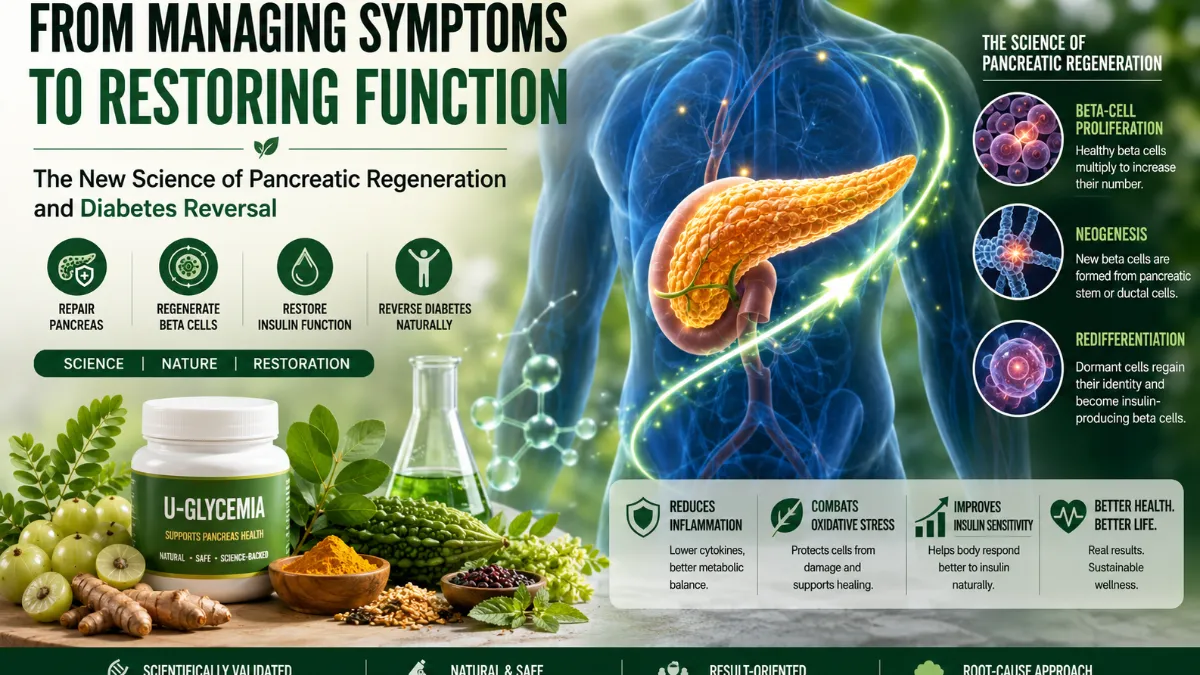
Regenerating beta cells within the human pancreas is one of the most exciting areas of modern biomedical research. Scientists have identified three primary cellular pathways through which functional beta-cell mass can be restored:
- Beta-Cell Proliferation: This involves stimulating the remaining healthy beta cells to divide and replicate, thereby increasing the overall cell count. Specific growth factors and certain natural plant compounds have been shown to trigger cell-cycle proteins that drive this replication process.
- Neogenesis: This is the formation of entirely new beta cells from non-beta progenitor cells located within the pancreatic ductal lining or the islets themselves. During neogenesis, stem-like cells undergo a differentiation process guided by specific transcription factors to become mature, functional beta cells.
- Redifferentiation: In many diabetic patients, beta cells do not actually die; instead, they go into a state of hibernation or \"de-differentiation\" to escape the toxic environment of high blood sugar, reverting to an immature precursor cell state that cannot produce insulin. If the metabolic stress is removed and appropriate biochemical signals are provided, these cells can \"re-differentiate\" back into active, insulin-producing beta cells.
Understanding these pathways allows researchers to design targeted natural and clinical interventions that support the body's inherent capacity for pancreatic repair.
Glycemia Anti Diabetic Clinic: A Pioneer in Pancreatic Regeneration
While the international scientific community continues to explore beta cell regeneration in laboratory settings, a clinical pioneer in India has been successfully applying these regenerative principles to patient care for nearly two decades. The Glycemia Anti Diabetic Clinic, widely recognized as the best diabetes clinic in Kerala, has established a revolutionary treatment protocol that focuses on treating the root cause of diabetes rather than just managing blood sugar levels. Located at Building 27/97, Near Asset Homes Flat, Airport road, Melechovva, Kannur, Kerala - 670006, the clinic operates on the philosophy that the body can heal itself if provided with the correct biological support and metabolic environment. Instead of relying on escalating doses of chemical medications that further exhaust the pancreas, the team at Glycemia Anti Diabetic Clinic utilizes a scientifically validated, result-oriented approach designed to repair and regenerate damaged pancreatic beta cells. Their treatment methods integrate authentic herbal formulations, strict dietary discipline, and close clinical monitoring to systematically reduce insulin resistance, clear glucotoxicity, and stimulate natural insulin production. Over the years, this comprehensive protocol has helped thousands of patients successfully reduce or completely eliminate their dependency on diabetes medications, demonstrating the practical feasibility of diabetes reversal. For patients unable to travel to Kannur, the clinic also offers online consultations, allowing individuals worldwide to access their personalized reversal programs.
Scientific Validation and the Role of U-Glycemia
The credibility of Glycemia Anti Diabetic Clinic's approach is backed by rigorous scientific validation and testing at prestigious national institutions. A central component of their treatment protocol is the specialized food supplement, U-Glycemia. This revolutionary formulation was developed to support pancreatic health, protect beta cells from oxidative damage, and stimulate natural insulin secretion. To verify its safety and effectiveness, the supplement underwent comprehensive clinical and laboratory testing at the internationally renowned Amala Cancer Research Center in Thrissur, Kerala—an institution accredited by the Indian Council of Medical Research (ICMR). The research validated that the formulation is non-toxic, safe for long-term consumption, and active in supporting metabolic balance. Furthermore, components of their research and formulations have been tested and verified at other esteemed national bodies, including the Bhabha Atomic Research Center (BARC), the Council for Scientific and Industrial Research (CSIR), and the Central Food Technological Research Institute (CFTRI) in Mysore. This extensive scientific backing provides patients with the confidence that they are following a safe, evidence-aware path toward pancreatic recovery. By combining traditional herbal wisdom with modern scientific validation, the Glycemia Anti Diabetic Clinic continues to lead the way in restorative diabetes care, offering a beacon of hope for individuals seeking to reclaim their health, rebuild their pancreas, and live a life free from the constraints of chronic diabetes.
Sources and References
Frequently Asked Questions
Yes, scientific research indicates that pancreatic beta cells can regenerate through replication of existing cells, neogenesis from progenitor cells, and redifferentiation of hibernating cells when metabolic stress is removed.
U-Glycemia is a clinically tested food supplement developed to support beta cell health and stimulate natural insulin production, validated by Amala Cancer Research Center.