


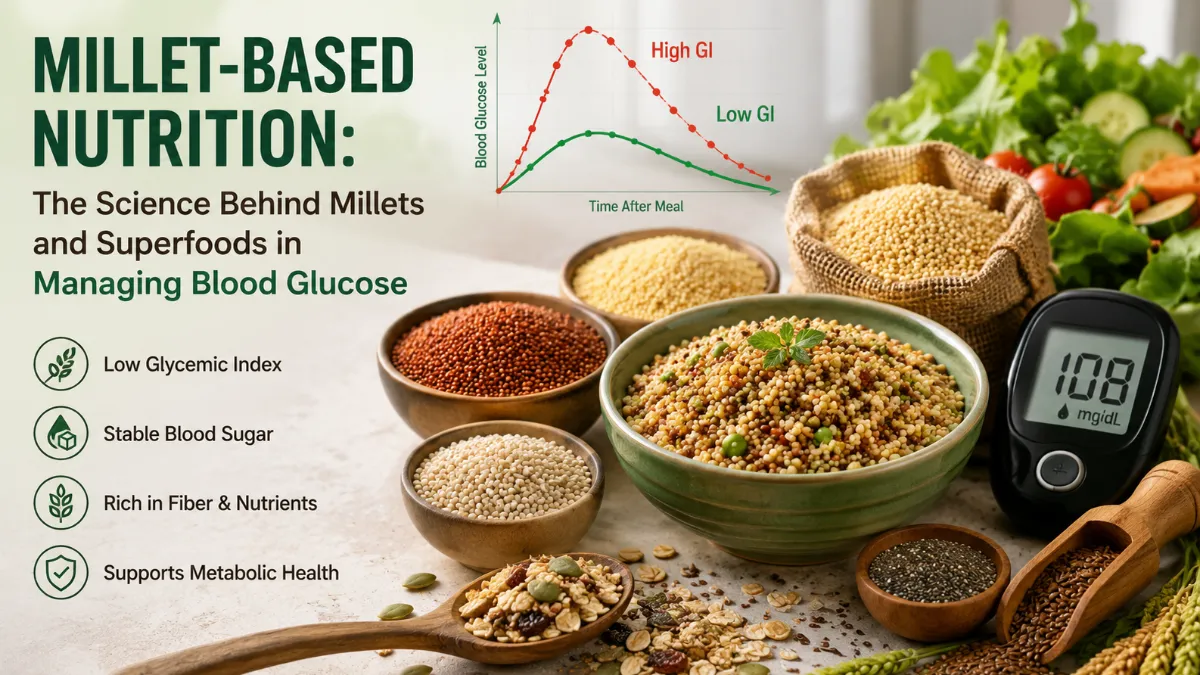
Millet-Based Nutrition: The Science Behind Millets and Superfoods in Managing Blood Glucose
Discover the metabolic benefits of millets like Ragi, Foxtail, and Pearl millet, alongside oats and superfoods, in providing stable energy, improving insulin sensitivity, and managing blood glucose levels naturally.
Article Snapshot
This article details how millets (Ragi, Foxtail, Pearl) and oats stabilize blood sugar levels through slow-release starch (amylose) and high dietary fiber. It explains the role of magnesium as an insulin receptor cofactor and highlights Glycemia Biotech's Health Mix Powder and Ragi Powder as effective low-GI options.
- Millets contain high amylose and resistant starch, releasing glucose gradually.
- Soluble fiber forms a viscous gel that delays glucose absorption.
- Short-chain fatty acids (SCFAs) from fiber fermentation stimulate GLP-1 release.
- Magnesium is an essential cofactor for insulin receptor tyrosine kinase activity.
- Glycemia Biotech provides low-GI options like Health Mix Powder and Ragi Powder.
Medical Review & Verification
The Metabolic Impact of Modern Diets and the Rise of Glycemic Instability
In the contemporary landscape of global health, metabolic disorders—particularly Type 2 diabetes and insulin resistance—have reached epidemic proportions. A primary driver of this metabolic crisis is the composition of the modern diet, which is heavily dominated by refined grains, polished white rice, ultra-processed flours, and simple sugars. These dietary components are rapidly digested and absorbed, causing steep, immediate spikes in postprandial (post-meal) blood glucose. Over time, these recurring glucose spikes place an immense burden on the beta cells of the pancreas, which must continuously secrete high levels of insulin to clear sugar from the bloodstream. Eventually, this constant demand leads to insulin receptor desensitization—known as insulin resistance—and pancreatic beta-cell exhaustion. Consequently, managing blood glucose is no longer just about taking medication; it requires a fundamental restructuring of dietary carbohydrate intake toward foods that release glucose slowly and sustainably. This is where ancient grains, specifically millets, and functional superfoods play a critical role in preventative health and daily wellness routines.
Understanding Glycemic Index vs. Glycemic Load
To fully grasp the nutritional superiority of millets over refined grains, it is essential to distinguish between Glycemic Index (GI) and Glycemic Load (GL). The Glycemic Index is a system that ranks carbohydrates on a scale from 0 to 100 based on how quickly and how much they raise blood sugar levels after eating. Foods with a high GI (70 or above), such as white bread or jasmine rice, are rapidly broken down and absorbed. Foods with a low GI (55 or below), such as millets, digest much more slowly, producing a gentle rise in blood sugar. However, GI only tells part of the story. The Glycemic Load (GL) takes into account both the GI of the food and the amount of carbohydrates in a typical serving. The formula for calculating GL is simple: GL = (GI * carbohydrate grams per serving) / 100. A food might have a medium GI, but if a normal serving contains very few carbohydrates, its glycemic load is low, meaning its impact on your blood sugar is minimal. Millets excel in both categories, offering a low-to-medium GI coupled with a highly favorable glycemic load, making them the ideal carbohydrate choice for anyone seeking glycemic stability.
What Are Millets? Understanding the Nutritive Profile of Ancient Grains
Millets are a group of small-seeded grasses that have been cultivated as staple crops in arid and semi-arid regions of Asia and Africa for thousands of years. Unlike modern hybrid wheat and polished rice, millets have remained largely unchanged, preserving their rich, complex nutritional matrix. The primary millets utilized in metabolic wellness include finger millet (commonly known as Ragi or Nachni), foxtail millet, pearl millet (Bajra), barnyard millet, and proso millet. In addition to these, whole grain oats and specific seed-based superfoods like chia and flaxseed complement the dietary management of diabetes. What sets these ancient grains apart is their high concentration of dietary fiber, essential minerals (such as magnesium, potassium, and iron), and bioactive phytochemicals (including polyphenols, lignans, and phytates). These components do not work in isolation; rather, they form a synergistic food matrix that directly influences how carbohydrates are digested, absorbed, and metabolized by the body.
- Finger Millet (Ragi): Noted for its exceptionally high calcium content (about 344 mg per 100g), Ragi is also rich in polyphenols and dietary fiber, which inhibit the enzymes alpha-amylase and alpha-glucosidase, slowing down starch digestion.
- Foxtail Millet: High in protein and mineral content, foxtail millet has a Glycemic Index of around 50.8, making it highly effective in lowering blood glucose and lipid levels.
- Pearl Millet (Bajra): Packed with iron and zinc Bajra digests slowly due to its high fiber content and helps maintain a steady release of energy over several hours.
- Barnyard Millet: Having the lowest carbohydrate content and energy value among all millets, barnyard millet is exceptionally high in amylase-resistant starch, making it a perfect grain for glycemic control.
The Role of Starch Architecture: Amylose vs. Amylopectin
To understand why millets are superior to refined grains for blood sugar control, one must examine their carbohydrate structure. Dietary starch is composed of two types of polysaccharides: amylose and amylopectin. Amylose is a linear chain of glucose molecules that is tightly packed, making it relatively resistant to enzymatic breakdown by amylase in the digestive tract. Amylopectin, on the other hand, is a highly branched molecule with a large surface area, allowing digestive enzymes to quickly break it down into glucose. Refined white rice and white flour are exceptionally high in amylopectin, leading to rapid digestion and a high Glycemic Index (GI). In contrast, millets contain a significantly higher proportion of amylose and resistant starch. Because the linear chains of amylose take longer to hydrolyze, glucose is released into the bloodstream at a gradual, controlled rate, preventing the sharp peaks and subsequent crashes associated with high-GI foods.
Biochemical Mechanisms of Glycemic Regulation by Millets
The slow release of glucose is only the first stage of how millets support metabolic health. The high content of soluble and insoluble dietary fiber in millets initiates several crucial biochemical processes in the gastrointestinal tract. Soluble fiber, particularly beta-glucans (which are also abundant in oats and barley), dissolves in water to form a viscous, gel-like substance in the stomach and small intestine. This viscous gel performs three main functions:
- It slows down gastric emptying, keeping you full for longer and reducing the urge to overeat.
- It creates a physical barrier around starch molecules, slowing down the access of digestive enzymes (alpha-amylase and alpha-glucosidase) to the carbohydrates.
- It delays the transport of glucose across the intestinal mucosal membrane into the bloodstream.
Meanwhile, insoluble fiber increases fecal bulk and accelerates transit time through the colon, which promotes a healthy gut microbiome. A balanced microbiome, populated by beneficial strains like Bifidobacteria and Lactobacilli, digests this prebiotic fiber through fermentation, producing short-chain fatty acids (SCFAs) like butyrate, propionate, and acetate. These SCFAs enter the portal circulation and bind to specific receptors, stimulating the release of glucagon-like peptide-1 (GLP-1) and peptide YY (PYY) from the gut. GLP-1 is a key hormone that enhances insulin secretion in a glucose-dependent manner, slows gastric transit, and promotes a feeling of fullness, thereby directly improving glycemic control and insulin sensitivity.
Magnesium: The Essential Mineral Cofactor for Insulin Sensitivity
Beyond fiber, millets are an exceptional source of magnesium, an essential macromineral that acts as a cofactor for more than 300 enzymatic reactions in the human body. Crucially, magnesium is directly involved in glucose metabolism and insulin action. The insulin receptor itself is a tyrosine kinase enzyme that requires magnesium to transition into its active state upon binding with insulin. When intracellular magnesium levels are low, the tyrosine kinase activity of the receptor is impaired, hindering the downstream signaling cascade that triggers glucose transporter proteins (GLUT4) to migrate to the cell membrane and absorb glucose. By providing a rich, bioavailable source of magnesium, regular millet consumption supports the proper function of insulin receptors, helping to reverse peripheral insulin resistance in skeletal muscle and adipose tissue.
Superfoods for Synergistic Diabetic Support
While millets provide the baseline carbohydrate structure for a diabetic-friendly diet, incorporating specific superfoods can amplify these metabolic benefits. Whole grain oats, for instance, are celebrated for their exceptionally high concentration of beta-glucan soluble fiber. Numerous clinical studies have demonstrated that regular intake of beta-glucans significantly reduces both postprandial glucose responses and long-term glycated hemoglobin (HbA1c) levels. Similarly, seed-based superfoods like flaxseed and chia seeds add valuable healthy fats and protein to the dietary matrix. Flaxseeds are rich in alpha-linolenic acid (ALA), an omega-3 fatty acid that possesses strong anti-inflammatory properties, and lignans, which act as powerful antioxidants. Chia seeds, when exposed to liquid, form a thick mucilagenous gel that drastically slows down digestion. Adding these superfoods to millets creates a highly functional dietary profile that addresses multiple facets of metabolic syndrome, including dyslipidemia, hypertension, and systemic inflammation.
Designing a Practical Low-GI Meal Plan with Millets
Integrating millets into your daily routine does not require a complete overhaul of your eating habits; it is about making smart, sustainable swaps. A typical day's low-GI meal plan utilizing millets could look like this:
- Breakfast: Start the day with a warm bowl of porridge made from Ragi powder, topped with a tablespoon of ground flaxseed and a handful of almonds. Alternatively, traditional South Indian dishes like idli or dosa can be prepared using a batter made of foxtail millet and urad dal instead of white rice.
- Lunch: Replace white rice with cooked whole-grain barley rice, paired with a generous portion of leafy green vegetables, a bowl of lentil dal, and a lean protein source. The beta-glucans in the barley will keep your blood sugar stable throughout the afternoon, preventing the dreaded post-lunch energy crash.
- Mid-Afternoon Snack: A handful of roasted pumpkin seeds or a small glass of buttermilk spiced with ginger and curry leaves.
- Dinner: Serve a warm, comforting vegetable khichdi prepared with barnyard millet and split yellow moong dal, served with a side of steamed vegetables.
By making these simple adjustments, you can enjoy delicious, culturally familiar meals while keeping your glycemic parameters within a healthy, stable range.
Introducing Glycemia Biotech's Nutritional Solutions
At Glycemia Biotech, we recognize that while the benefits of millets and superfoods are scientifically proven, incorporating them into a busy modern lifestyle can be challenging. To bridge this gap, we have developed a range of premium, science-backed nutritional products designed to make low-GI nutrition convenient and accessible. Our flagship product in this category, Health Mix Powder, is a carefully crafted blend of premium millets, oats, and selected superfoods. This nutrient-dense mix is formulated to stabilize blood sugar levels, prevent post-meal spikes, and boost natural immunity, making it an ideal breakfast or meal replacement for individuals managing Type 2 diabetes. Additionally, our organic Ragi Powder offers a pure, high-calcium, fiber-rich option that can be easily integrated into traditional recipes. By combining the natural power of ancient grains with modern formulation standards, Glycemia Biotech provides practical tools to help you take control of your metabolic health, support long-term wellness, and live a vibrant life free from the constant stress of blood sugar fluctuations.
Sources and References
Frequently Asked Questions
Millets contain more amylose and dietary fiber, which take longer to digest, resulting in a low Glycemic Index (GI) and a gradual release of glucose compared to the rapid spikes caused by white rice.
Magnesium is a vital cofactor for the insulin receptor. It activates tyrosine kinase, which is necessary for downstream signaling that allows cells to absorb glucose.