

Navigating Post-Meal Sugar Spikes: Immediate Strategies for Glycemic Stability
Learn effective strategies to manage blood sugar spikes immediately after meals, focusing on rapid-acting natural aids and dietary awareness.
Article Snapshot
This article provides a guide on managing blood sugar spikes immediately after meals, particularly after consuming high-carbohydrate foods. It explains the body's glycemic response and highlights the importance of the first 15 minutes post-meal. The content discusses the benefits of rapid-acting herbal aids, such as oral sprays for quick absorption, and emphasizes complementary dietary strategies like incorporating low-GI foods. Glycemia Biotech's Glyco Fix Spray is presented as an innovative solution for swift blood sugar management, aligning with the company's focus on science-backed, natural healthcare.
- Understand the body's natural glycemic response to meals.
- Focus on immediate strategies within the first 15 minutes post-meal.
- Explore rapid-acting natural aids like oral sprays for quick absorption.
- Integrate low-GI foods and balanced nutrition for sustained stability.
- Glycemia Biotech offers innovative, science-backed solutions for glycemic control.
Medical Review & Verification
You have just finished a heavy meal—perhaps a large plate of white rice, biryani, sweets, bakery foods, or another carbohydrate-rich meal. If you have diabetes, prediabetes, or insulin resistance, one thought may immediately come to mind: Is my blood sugar going to spike?
Post-meal blood sugar increases are common because carbohydrates are broken down into glucose during digestion. The glucose then enters the bloodstream, and insulin helps move it into the body's cells for energy or storage.
For people with impaired insulin function or insulin resistance, this process may not work efficiently. As a result, blood glucose can rise higher than desired and remain elevated for longer.
The good news is that your daily habits can influence post-meal glucose patterns. The first few minutes after eating can be used to begin a sensible routine involving awareness, gentle movement when appropriate, hydration, glucose monitoring, and following your prescribed treatment plan.
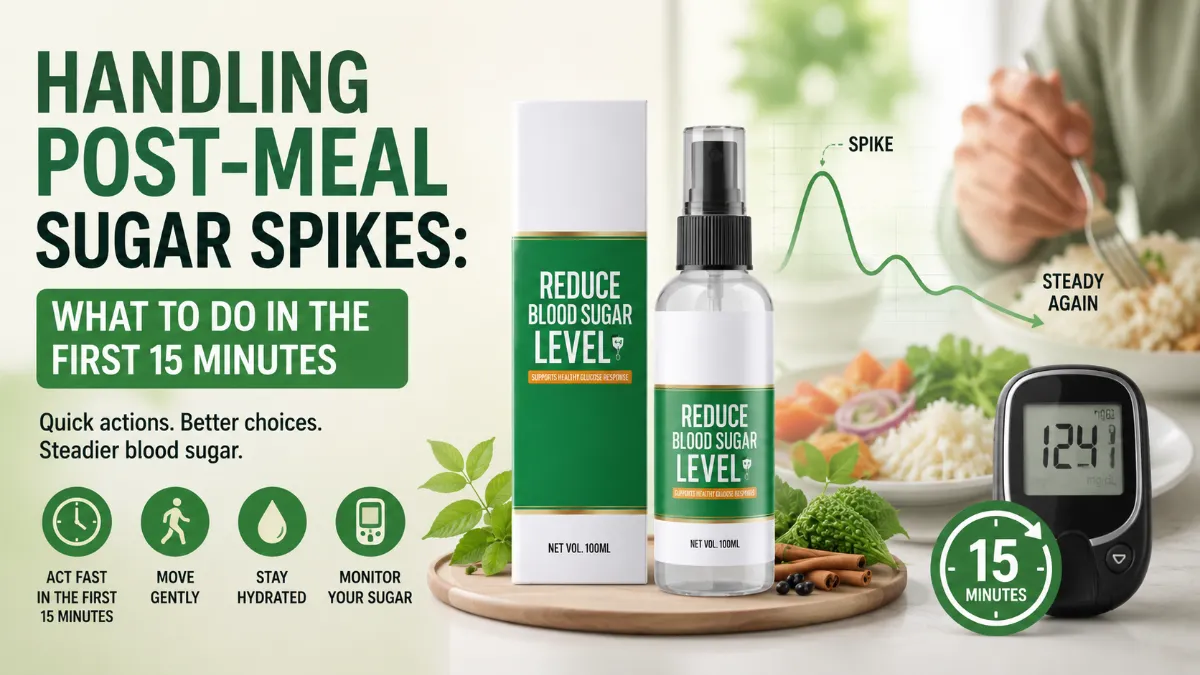
Some people also use complementary wellness products such as Glyco Fix Spray as part of their broader blood sugar management routine. However, supportive herbal products should complement—not replace—prescribed medicines, insulin, a balanced diet, physical activity, and professional medical care.
This guide explains what happens after a high-carbohydrate meal and what practical steps you can consider during the first 15 minutes.
What Is a Post-Meal Blood Sugar Spike?
A post-meal or postprandial glucose rise is an increase in blood sugar after eating.
Carbohydrate-containing foods have the most direct effect on blood glucose. During digestion, carbohydrates are broken down into glucose, which enters the bloodstream.
Foods that may cause a faster or larger rise in some people include:
-
Large portions of white rice
-
Sugary drinks
-
Sweets and desserts
-
Cakes and pastries
-
Refined flour products
-
Sweetened breakfast cereals
-
Large portions of potatoes
-
Highly processed snack foods
-
Meals containing excessive amounts of rapidly digested carbohydrates
The size and timing of a glucose rise differ from person to person. Portion size, food combination, insulin sensitivity, medication, activity level, stress, sleep, and individual metabolism can all influence the response.
Why the First 15 Minutes Matter
The title of this guide focuses on the first 15 minutes, but this does not mean that a glucose spike can always be stopped within exactly 15 minutes.
Post-meal glucose levels are commonly assessed one to two hours after eating, and the exact glucose curve varies considerably between individuals.
The first 15 minutes are useful because this is when you can begin making sensible decisions rather than waiting until a high reading appears and reacting without a plan.
Think of it this way.
If you accidentally eat a much larger carbohydrate portion than usual, you cannot remove the meal from your digestive system. However, you can avoid adding more unnecessary carbohydrates, follow your prescribed medication plan, begin appropriate light activity if safe for you, and observe your glucose response.
A Practical First-15-Minute Routine
Minutes 0–3: Stay Calm and Assess the Meal
The first step is simple: understand what you have eaten.
Ask yourself:
-
Was the meal unusually large?
-
Did it contain a lot of white rice or refined carbohydrates?
-
Did I have a sugary drink?
-
Was dessert added to an already carbohydrate-heavy meal?
-
Did I take my prescribed medicine or mealtime insulin as directed?
-
Have similar meals caused significant glucose rises before?
This quick assessment can help you understand the likely cause of the rise.
For example, imagine that you normally eat one moderate serving of rice with vegetables, protein, and salad. At a wedding, however, you eat a much larger rice portion, a sweet drink, and two desserts.
Recognizing that this meal differs significantly from your usual diet helps you make better decisions for the next few hours.
Do not take extra insulin or medication unless you have a correction plan specifically provided by your healthcare professional.
Minutes 3–5: Choose Water Instead of More Sugar
After a heavy meal, avoid following it with additional sweet drinks.
Water is generally the simplest drink choice. It contains no carbohydrates and does not add more glucose to the meal.
This sounds obvious, but it is easy to overlook.
Consider this example: a person finishes a large plate of biryani and then drinks a sweetened soft drink. The drink adds rapidly absorbable sugar on top of an already carbohydrate-rich meal.
Choosing water does not magically remove glucose from the bloodstream, but it prevents the addition of another unnecessary source of sugar.
Minutes 5–15: Consider Gentle Movement if It Is Safe for You
For many people, light physical activity after eating can be useful.
Muscle activity increases glucose use, and physical activity can also improve insulin sensitivity. Research has found benefits from post-meal walking, although the ideal timing, duration, and intensity can vary.
A practical approach might be a comfortable walk rather than intense exercise immediately after a large meal.
Examples include:
-
Walking around the house
-
Taking a short walk outside
-
Walking along a corridor at work
-
Doing light household activities
-
Standing up and moving rather than immediately sitting for a long period
The important word is gentle.
A hard sprint, intense gym session, or strenuous workout is not automatically better. Very intense exercise can sometimes temporarily increase glucose in some people because stress hormones can stimulate glucose release.
People taking insulin or medicines that can cause hypoglycemia should also be careful. Exercise can lower blood glucose, and the combined effect of medicine and activity can sometimes lead to a low.
Where Glyco Fix Spray May Fit Into a Routine
Glyco Fix Spray is presented as a convenient herbal wellness product for people interested in blood sugar support.
The spray format offers practical convenience compared with powders, large tablets, or products that require preparation. It may be easier to carry while travelling, working, or attending social events.
A person who chooses to use Glyco Fix should follow the product directions and consider it within a broader wellness plan.
That plan should still include:
-
Appropriate meal planning
-
Portion awareness
-
Regular physical activity
-
Blood glucose monitoring where recommended
-
Good sleep
-
Stress management
-
Weight management where appropriate
-
Prescribed diabetes treatment
An important distinction should be made between rapid delivery format and proven rapid correction of hyperglycemia. A spray format may be convenient and may be designed for oral-mucosal exposure, but that alone does not prove that a product will immediately reverse a post-meal glucose spike.
People using diabetes medicines or insulin should discuss complementary products with a qualified healthcare professional.
Monitor the Pattern, Not Just One Number
A single glucose reading provides only one piece of information.
The more useful approach is to look for patterns.
For example, you might discover that:
-
A large white-rice lunch consistently causes a high reading.
-
The same meal with a smaller rice portion and more vegetables produces a different response.
-
Sweet drinks have a major effect on your glucose.
-
A short post-meal walk is associated with a better glucose curve.
-
Poor sleep appears to affect your next day's readings.
People using a continuous glucose monitor can review their glucose graph and compare different meals and activities. People using a standard glucose meter should follow the testing schedule recommended by their healthcare team.
The goal is to learn from repeated patterns rather than panic over every small change.
How to Prevent the Next Post-Meal Spike
Emergency-style reactions after every meal are not a good long-term strategy. Prevention is usually more useful.
1. Control the Carbohydrate Portion
A common problem is not necessarily eating carbohydrates, but eating too much at one time.
For example, instead of filling most of the plate with rice, consider a more balanced meal containing appropriate portions of vegetables, protein, and carbohydrates.
The right portions depend on individual nutritional needs and treatment plans.
2. Include Fiber-Rich Foods
Fiber-rich foods can be useful as part of an overall diabetes-friendly eating pattern.
Examples include:
-
Non-starchy vegetables
-
Beans and legumes
-
Whole grains where appropriate
-
Seeds
-
Nuts in sensible portions
-
Other minimally processed, fiber-containing foods
Fiber has several health benefits and is an important part of healthy eating for people managing diabetes.
3. Add an Appropriate Protein Source
A balanced meal may include a suitable protein source such as fish, eggs, chicken, pulses, or other options appropriate for the individual's diet.
The goal is not to remove every carbohydrate from the diet. It is to build balanced meals and understand how different portions and combinations affect your glucose.
4. Avoid Drinking Your Carbohydrates
Sugary drinks can deliver a significant amount of rapidly available carbohydrate without providing the same feeling of fullness as a complete meal.
Common examples include:
-
Soft drinks
-
Sweetened juices
-
Sugary tea or coffee
-
Sweetened energy drinks
-
Some sweetened milk-based drinks
Replacing these with water or another suitable unsweetened option can reduce unnecessary sugar intake.
5. Build a Consistent Activity Routine
A short walk after one heavy meal can be helpful, but regular physical activity is more important for long-term health.
Physical activity can improve insulin sensitivity, support weight management, and contribute to better overall glucose management.
Consistency matters more than trying to compensate for an unhealthy diet with occasional exercise.
What Not to Do After a High-Carb Meal
When people see a rising glucose reading, they may react impulsively.
Avoid these common mistakes:
-
Do not take an unplanned extra medicine dose.
-
Do not inject additional insulin unless following your prescribed correction plan.
-
Do not perform extreme exercise without understanding how your glucose responds.
-
Do not stop eating for an excessive period as punishment for one meal.
-
Do not assume that a supplement can cancel out unlimited carbohydrate intake.
-
Do not ignore repeated high post-meal readings.
One unusual meal is different from a repeated pattern. If your glucose frequently rises outside your personal target range after meals, discuss the pattern with your healthcare professional.
Your meal plan, medication timing, dosage, or other aspects of diabetes management may need professional review.
A Real-Life Example
Consider Ravi, who has type 2 diabetes and attends a family celebration.
He eats a large serving of rice, curry, fried snacks, and dessert. After finishing the meal, he realizes that the carbohydrate load was much higher than usual.
Instead of drinking a sweetened beverage and sitting for the next two hours, he follows a more sensible routine.
First, he chooses water. He does not take any extra medication because his doctor has not given him instructions to do so. Since gentle walking is safe for him, he walks comfortably for a short period and continues monitoring according to his normal plan.
If he uses a complementary wellness product such as Glyco Fix Spray, he uses it only according to its instructions and does not treat it as a substitute for his prescribed diabetes care.
Most importantly, Ravi learns from the experience. At the next celebration, he chooses a smaller rice portion, includes more suitable side dishes, skips the sugary drink, and takes a short walk afterward.
That is sustainable blood sugar management: learning, planning, and improving daily habits.
When Is High Blood Sugar an Emergency?
Not every post-meal increase is an emergency. However, very high or persistent glucose levels can require medical attention.
Follow the sick-day and high-glucose instructions given by your healthcare team. Seek urgent medical help if severe hyperglycemia is accompanied by concerning symptoms such as vomiting, difficulty breathing, severe weakness, confusion, or loss of consciousness.
People with type 1 diabetes should follow their healthcare team's instructions regarding ketone testing and high glucose management.
A wellness spray or supplement should never be used as an emergency treatment for severe hyperglycemia.
The Best Strategy Is Preparation
The easiest glucose spike to manage is often the one you reduce through preparation.
Before a restaurant meal, celebration, or travel day, think about:
-
Portion size
-
Sugary drinks
-
Dessert quantity
-
Your normal medication schedule
-
Opportunities for safe movement
-
Glucose monitoring supplies
-
Emergency glucose treatment if you are at risk of hypoglycemia
Good diabetes management does not require perfect eating every day. It requires understanding your body, recognizing patterns, and making informed decisions consistently.
Conclusion
Post-meal sugar spikes can happen, especially after large portions of rice, sweets, sugary drinks, and other carbohydrate-rich foods. The first 15 minutes after eating provide an opportunity to begin a sensible response: assess what you ate, avoid adding more sugar, choose water, consider gentle movement if it is safe for you, and follow your established treatment and monitoring plan.
Complementary wellness products such as Glyco Fix Spray may be used by some people as part of a broader blood sugar support routine. However, they should not be presented as emergency treatments or substitutes for prescribed diabetes medicines, insulin, healthy eating, monitoring, and professional care.
The strongest long-term strategy is not trying to “erase” every heavy meal afterward. It is building a routine based on balanced portions, regular activity, glucose awareness, appropriate medical treatment, and consistent daily habits.
Small decisions made every day can have a much greater impact than one dramatic reaction to a single glucose reading.
Meta Title
Post-Meal Sugar Spikes: What to Do First
Meta Description
Learn practical steps to manage post-meal sugar spikes, from gentle movement and monitoring to smarter meals and supportive wellness routines.
Tags
post-meal sugar spike, blood sugar management, postprandial glucose, diabetes management, Glyco Fix Spray, glucose monitoring, after meal walking, high blood sugar, diabetes diet, blood sugar support
URL Slug
handling-post-meal-sugar-spikes-first-15-minutes
Short Description
A practical guide to responding to post-meal blood sugar spikes. Learn what to consider during the first 15 minutes after a high-carbohydrate meal, including hydration, gentle movement, glucose awareness, safer medication practices, meal planning, and the role of supportive wellness products such as Glyco Fix Spray.
Recommended Blog Category
Diabetes Management & Blood Sugar Control
Frequently Asked Questions
1. What should I do immediately after eating a high-carbohydrate meal?
Stay calm, assess what you ate, avoid additional sugary foods or drinks, choose water, and follow your normal medication plan. Gentle movement may be useful for many people when medically appropriate.
2. Can walking after a meal help with a blood sugar spike?
Post-meal physical activity can improve glucose handling for many people. However, the response varies, particularly for people taking insulin or medications that can cause low blood sugar. Choose an activity level appropriate for your health and treatment plan.
3. Can I take extra diabetes medicine after eating too many carbohydrates?
Do not take extra medicine or insulin unless you are following a correction plan provided by your healthcare professional. Unplanned additional doses can cause dangerous hypoglycemia.
4. Can Glyco Fix Spray replace my diabetes medicine?
No complementary wellness product should replace prescribed diabetes medicines or insulin without medical advice. Glyco Fix Spray should be considered a supportive wellness product and used according to its instructions.
5. How can I prevent post-meal glucose spikes?
Focus on appropriate carbohydrate portions, balanced meals, fiber-rich foods, suitable protein sources, avoiding sugary drinks, regular physical activity, and following your prescribed treatment plan.
Sources and References
Frequently Asked Questions
Blood sugar spikes after eating occur when the body breaks down carbohydrates into glucose, which enters the bloodstream. If the body cannot efficiently use or store this glucose (due to issues with insulin production or sensitivity), blood sugar levels can rise rapidly.
The initial period after eating is when carbohydrates begin to be digested and glucose enters the bloodstream. Taking quick action during this time can help influence the overall glycemic response and potentially mitigate sharp spikes.
Rapid-acting herbal aids, particularly those in oral spray formats, are designed for quick absorption through the oral mucosa. This allows beneficial compounds to enter the bloodstream faster, potentially helping to moderate blood sugar levels more swiftly than traditional oral supplements.
Incorporating low-glycemic index (Low-GI) foods, ensuring a balance of protein, healthy fats, and complex carbohydrates, and increasing fiber intake can contribute to a more gradual and stable rise in blood sugar levels after meals.